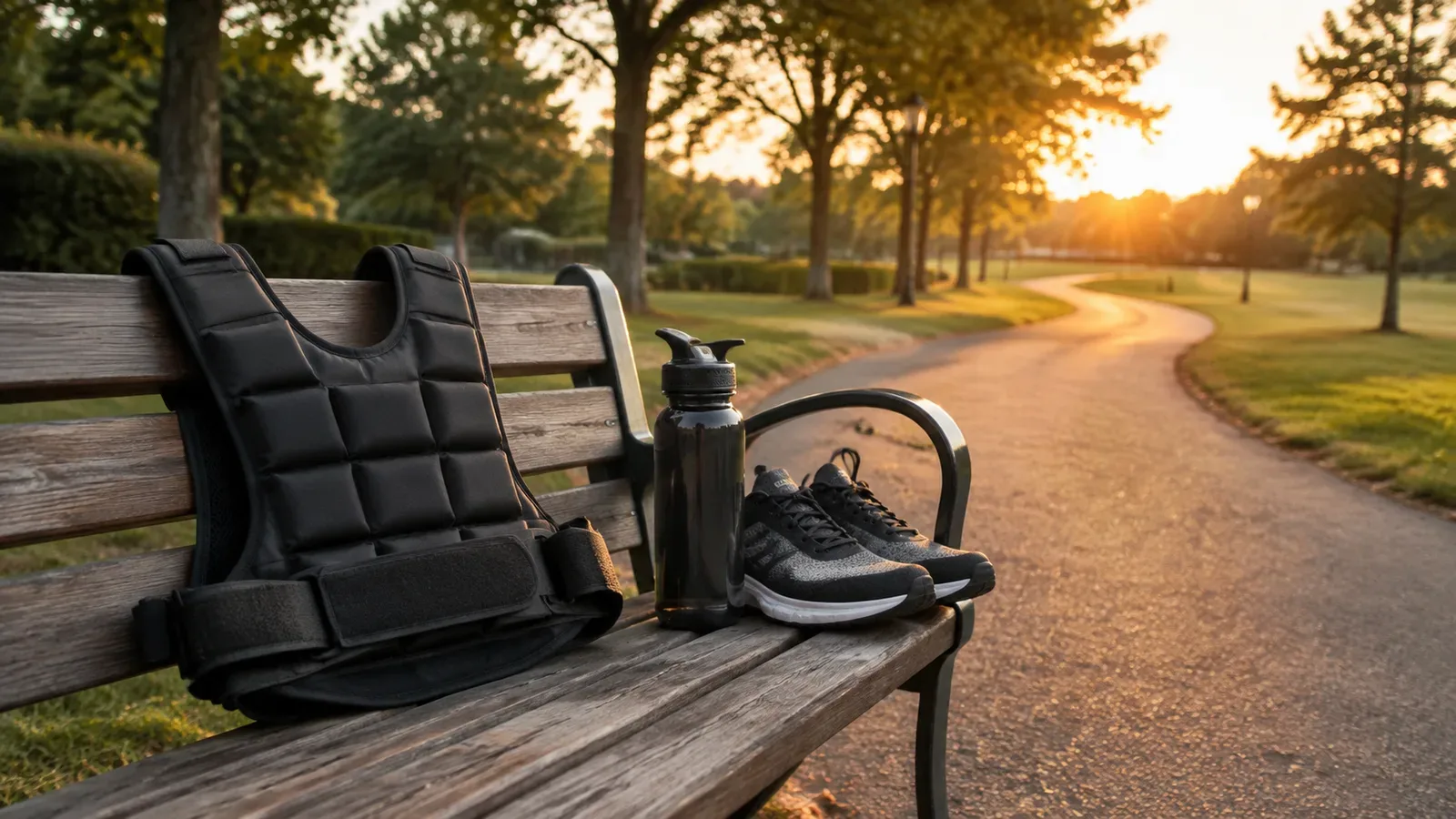
A weighted vest changes an ordinary walk by adding load close to the torso. That can raise the effort of a familiar route without requiring a faster pace, but extra weight also changes balance, posture, heat buildup, and the stress placed on joints. The best vest is therefore not the heaviest one. It is the one that fits securely, starts light enough, and lets you progress without changing the way you walk.
This is general fitness information, not medical advice. People with previous injuries, balance problems, cardiovascular concerns, pregnancy, osteoporosis, arthritis, or other health conditions should ask a qualified clinician whether added-load walking is appropriate.
What a weighted vest adds to walking
Walking already counts toward recommended aerobic activity when the intensity is appropriate. A vest can increase perceived effort and energy demand on the same route. It does not automatically build full-body strength, replace resistance training, or guarantee weight loss. Cleveland Clinic sports-medicine guidance notes that weighted vests can add challenge but should be used conservatively and with attention to fit and prior injuries.
Start with fit, not load
The vest should stay close to the torso
A vest that bounces or slides can rub the shoulders, alter stride, and distract you on stairs or uneven ground. Look for shoulder and side adjustments that secure the load without restricting breathing. Try normal arm swing, a shallow squat, and several brisk steps. The vest should not ride into the neck or shift toward one side.
Weight distribution should be even
Removable pockets are useful only if the load can be balanced front-to-back and left-to-right. A fixed-weight vest is simpler, but it gives you no room to scale down. If removable weights can fall out or sit against the ribs, the design is not suitable for movement.
Breathability matters
Extra fabric and close-fitting panels trap heat. Mesh zones, narrow shoulder panels, and washable surfaces improve comfort, but no vest eliminates heat stress. Choose cooler times of day, carry water when appropriate, and shorten the session in hot or humid conditions.
How much weight should a beginner use?
There is no single starting load for everyone. Cleveland Clinic's 2026 guidance points to a modest range and warns that heavier is not necessarily more beneficial. Treat any percentage as an upper boundary to discuss, not a target you must reach. Beginners can start with the lightest configuration available—or begin with unweighted walking and add load only after a stable routine is comfortable.
Your posture and gait are the practical test. If you lean forward, shorten your stride, stomp, grip the vest, or cannot speak comfortably at the intended effort, reduce the load or stop. Increase only one variable at a time: weight, distance, speed, incline, or frequency.
A sensible progression
- Walk the planned route without added weight and note how it feels.
- Use the lightest balanced vest for a short, flat session.
- Leave recovery time and watch for pain that persists after exercise.
- Extend duration gradually before adding more weight.
- Recheck fit whenever the load changes.
A weighted vest is not ideal for every workout. Fast cycling, technical trails, jumping, and activities that depend heavily on balance can carry more risk when your center of mass changes. For many people, flat walking is the easiest place to evaluate tolerance.
Buying criteria that matter
| Feature | Useful sign | Warning sign |
|---|---|---|
| Adjustment | Secure at shoulders and sides | One-size design that bounces |
| Load | Small, balanced increments | Large jumps or loose weights |
| Closure | Easy to operate but protected | Hard edges against skin |
| Visibility | Reflective details for low light | Dark profile with no light attachment point |
| Care | Clear cleaning instructions | Absorbent material with no washable layer |
| Storage | Weights stay organized and dry | Unmarked pieces that are easy to mismatch |
Comfort details worth paying for
Broad pressure distribution usually feels better than narrow straps. A low-profile shape is less likely to interfere with arm swing. Reflective trim is helpful near traffic, although it does not replace a light, bright clothing, or route awareness. A small key pocket can be useful; a phone pocket high on the chest may bounce or make the vest pull unevenly.
Do not assume “one size fits all.” Check the manufacturer's torso measurements and return policy. A vest can fit the chest but still be too long for a short torso, causing it to hit the hips with each step.
Signs to stop
Stop if you feel sharp pain, chest discomfort, dizziness, unusual shortness of breath, numbness, or a new change in gait. Shoulder hot spots, back pain, and joint pain are not signals to “push through.” Remove the vest, return to normal walking, and seek appropriate professional advice if symptoms are concerning or persist.
Weighted vest versus a loaded backpack
A vest distributes load around the torso and can feel more stable. A backpack is more versatile and may be better for carrying water and layers, but weight placed far from the back can sway. Neither is inherently safer: fit, load, terrain, and the wearer's experience determine the better option.
The bottom line
For walking, prioritize a close fit, balanced adjustable load, breathable construction, and small progression steps. The right purchase should make restraint easy, not tempt you to start too heavy. A comfortable unweighted routine remains the foundation; the vest is simply one optional way to add challenge.