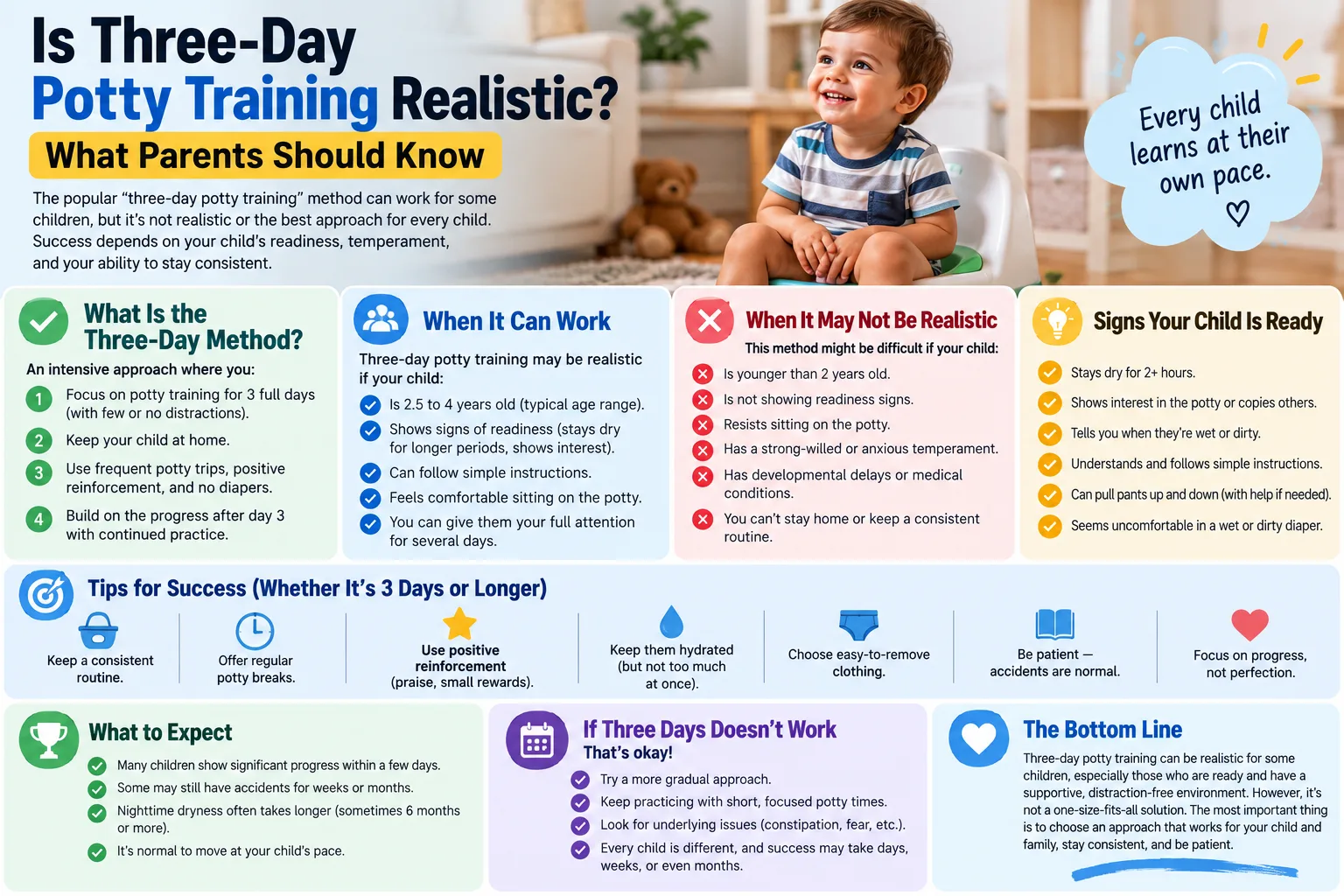
Three days is a method, not a developmental deadline
Three-day potty training is usually presented as an intensive period: remove diapers, stay close, offer regular toilet trips, and practice at home. That structure may help some families focus, but it cannot guarantee that every child will be ready in three days.
HealthyChildren.org, the American Academy of Pediatrics’ parenting site, notes that most U.S. children start between ages 2 and 3, but that training can begin whenever parent and child are ready. Readiness varies, and children need physical, cognitive, emotional, and social readiness. A child may understand what the potty is while still struggling to recognize body signals, manage clothing, communicate in time, or use an unfamiliar bathroom.
Why early success can be misleading
A child may use the potty at home with constant reminders but have accidents during play, naps, travel, childcare, or visits to another bathroom. That is not necessarily regression. It can mean the child is still learning to transfer the skill to new situations.
For example, a child may have early wins followed by accidents, reluctance to use a toilet away from home, or anxiety around bowel movements.
Watch for stress and withholding
Accidents are expected during learning, but persistent pain, fear, or stool withholding deserves attention. HealthyChildren.org explains that constipation can involve hard or painful stools, infrequent bowel movements, or withholding, and recommends contacting a child’s doctor when symptoms are concerning.
Do not shame a child for accidents or force prolonged toilet sitting. If training becomes a daily struggle, a calm pause can keep the potty familiar while reducing pressure. Seek medical advice for ongoing constipation, significant pain, blood in the stool, vomiting, severe abdominal swelling, or repeated withholding.
A flexible approach can still be structured
Families can introduce the potty gradually, practice at home, keep diapers available for outings, and coordinate language with other caregivers. A child might learn one part of the routine first—recognizing the urge, sitting briefly, pulling clothing down, or washing hands—before managing the entire process independently.
Bottom line
Three-day potty training may provide a focused routine for some families, but it should not be treated as a deadline. Follow the child’s readiness, keep responses calm, and involve a pediatrician when constipation, pain, or withholding becomes part of the picture.