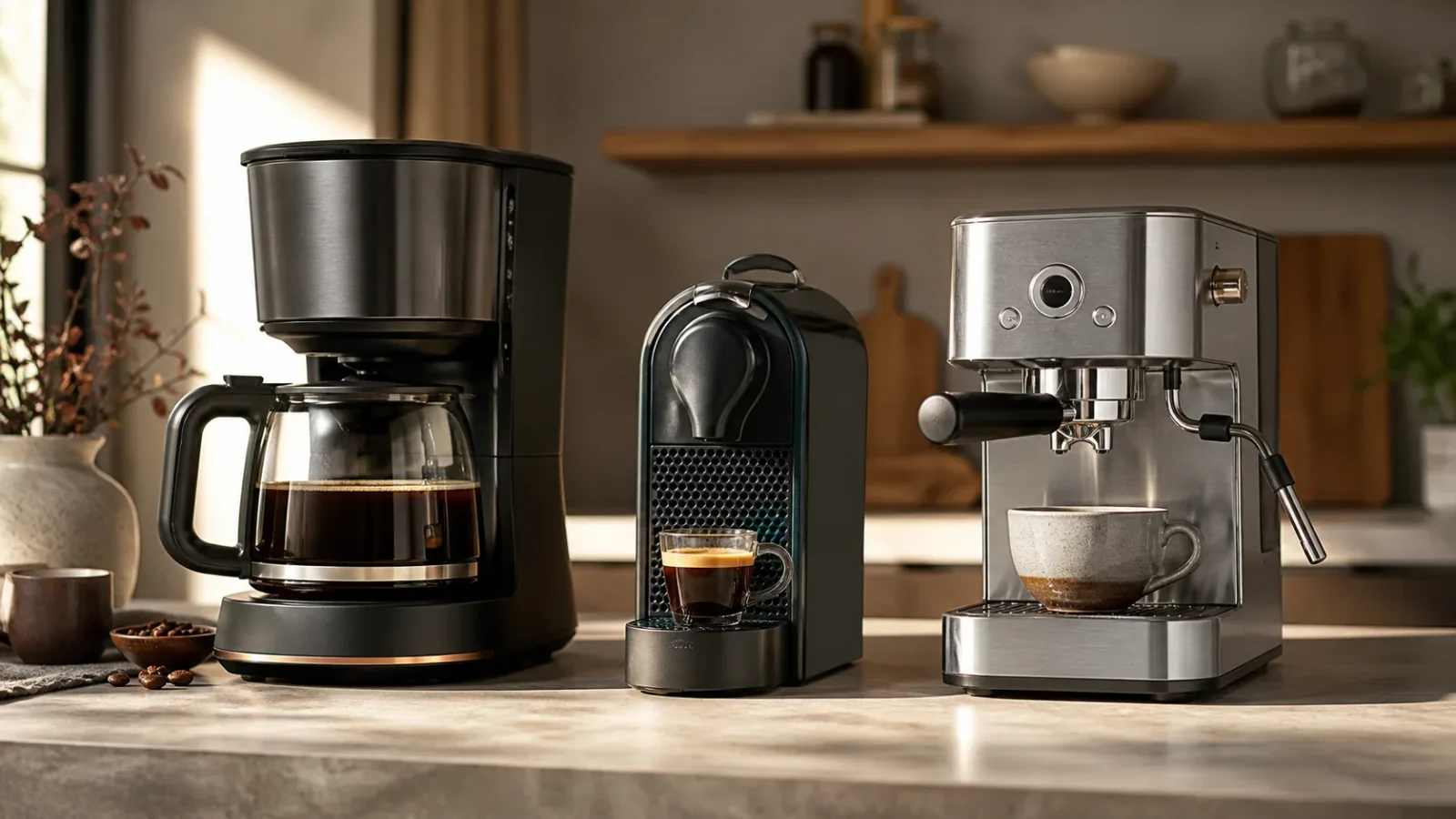
Drip, capsule and espresso machines solve different morning problems. A drip brewer makes several straightforward cups, a pod machine prioritizes speed and consistency, and an espresso machine offers concentrated coffee with more technique and maintenance. Deciding between those systems is more important than comparing famous model names. This guide helps US buyers match drink style, effort and ongoing ownership to the right type of coffee maker.
At-a-glance comparison
| System | Best for | Daily effort | Main ownership trade-off |
|---|---|---|---|
| Drip coffee maker | Several mugs or multiple people | Measure coffee, add water, clean carafe | Less suited to espresso-style drinks |
| Pod machine | Fast single servings | Insert capsule and empty used pods | Locked into a capsule ecosystem |
| Espresso machine | Espresso and milk drinks | Grinding, dosing, brewing and cleaning | More equipment and a learning curve |
Best for multiple cups: a drip coffee maker
A drip machine is the straightforward choice for a household that fills several mugs in the morning or serves more than one person. It brews a batch rather than asking the user to repeat a capsule or espresso workflow for every drink. The important questions are how much coffee you really make, how it stays warm and how easy the water reservoir and carafe are to clean.
Pros
- Efficient workflow for several cups.
- Works with a broad choice of ground coffee.
- Simple models can be inexpensive and easy to understand.
Cons
- Manufacturer cup counts may be smaller than everyday US mugs.
- A hot plate can continue heating coffee after brewing.
- Does not create true espresso simply by using darker coffee.
What to look for
Compare actual carafe volume, reservoir access and whether a thermal carafe suits your routine better than glass. Programmable start controls are useful only if loading the machine the night before fits how you buy and store coffee.
Best for speed: a pod coffee machine
A capsule machine removes measuring and loose grounds from the morning routine. It makes sense for one drink at a time, irregular schedules or a household in which people prefer different coffees. Convenience comes with an ecosystem decision: capsule compatibility affects flavor choice, cost and waste throughout ownership.
Nespresso Vertuo Plus
The Vertuo Plus represents a pod system aimed at several drink sizes with minimal preparation. It is attractive for a buyer who wants consistency and a compact routine, but it should be chosen only after accepting the compatible-capsule system. The current Majumedia catalog did not return a confident exact product offer, so no card was attached.
Pros
- Fast, repeatable single-cup process.
- Little loose coffee to clean up.
- Useful for households with different schedules.
Cons
- Ongoing capsule dependence.
- Used-capsule handling and recycling require attention.
- Milk drinks may need a separate frother.
Best for compact espresso: Breville Bambino Plus
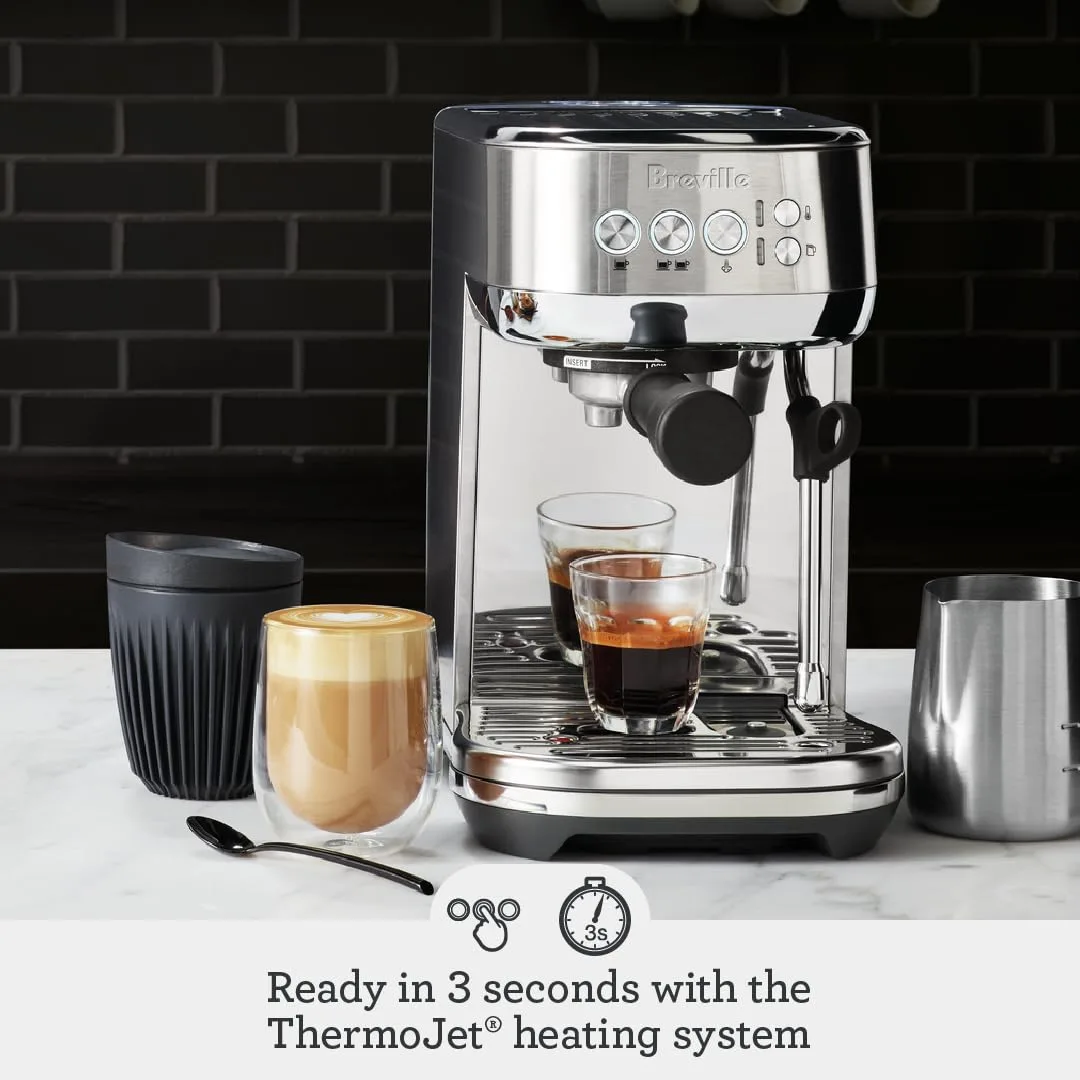
The Breville Bambino Plus is the strongest verified product in this guide. It targets buyers who want a compact espresso machine with assisted milk steaming rather than a large all-in-one appliance. The machine is only part of the setup: whole-bean buyers still need a suitable grinder, and consistent drinks depend on dose, grind and routine.
Best for
Choose it if espresso and milk drinks are the priority, counter space is limited and you are willing to learn a repeatable preparation and cleaning process.
Pros
- Compact approach to espresso and milk drinks.
- Exact Majumedia catalog record with existing merchant offers.
- Leaves the buyer free to choose a separate grinder.
Cons
- A capable grinder adds expense and counter space.
- Requires more cleanup than drip or pod brewing.
- Espresso consistency depends on the coffee and preparation, not the machine alone.
Budget compact espresso alternative: De'Longhi Dedica
The De'Longhi Dedica is known for a slim countertop format and can appeal to someone entering manual espresso with limited width available. It does not remove the need to manage coffee preparation and milk texture. Because the current detector did not find a confident exact catalog match, it remains an editorial alternative rather than an affiliate card.
Maintenance changes the ownership experience
Drip machines
Wash the carafe and filter area regularly and descale according to the manual and local water conditions. A machine that is easy to fill without moving is more likely to be maintained.
Pod machines
Empty the used-capsule container, clean the drip tray and follow the system's descaling process. Convenience does not mean maintenance-free.
Espresso machines
Clean the portafilter, basket and steam wand after use. Follow the manufacturer's backflushing or descaling guidance when applicable. A separate grinder also needs routine care.
How to choose the right coffee maker
Start with the drink you order most often. Choose drip for several mugs of filter coffee, pods for speed and low mess, and espresso for concentrated coffee and milk texture. Then account for counter space, noise, morning time and the cost of coffee, filters, capsules, cleaning supplies or a grinder.
If espresso is already the decision, Majumedia's espresso machines under $700 guide compares products within that narrower category.
Frequently asked questions
Is a pod machine cheaper than an espresso machine?
The upfront machine price is only one part of cost. Compare capsules, coffee beans or grounds, a grinder, milk equipment and cleaning supplies over the period you expect to own the machine.
Can a drip machine make espresso?
No. Drip brewing and espresso use different brewing methods. Strong drip coffee may taste concentrated, but it is not produced as espresso.
Do I need a grinder for the Bambino Plus?
A separate espresso-capable grinder is the usual route for whole beans. Pre-ground coffee can simplify setup, but freshness and grind suitability vary.
Budget for the complete setup
Compare a full first-year routine rather than only the machine. A drip setup may need paper filters and a grinder; a capsule setup needs compatible pods; an espresso setup may add a capable grinder, scale, milk pitcher and cleaning products. None of those costs should be invented in an article, but buyers should list them using current local prices before deciding.
Water also affects ownership. Follow the manufacturer guidance on filtration and descaling rather than applying a universal schedule. If a reservoir is difficult to remove under a cabinet, that daily inconvenience may matter more than an extra brewing mode.
Questions to answer before ordering
- How many drinks are made back to back?
- Does the household prefer filter coffee, espresso or milk drinks?
- How much counter height and depth are available?
- Will anyone consistently clean a steam wand or grinder?
- Is capsule compatibility acceptable for the expected ownership period?
Bottom line
Choose the system before the model. Drip is the practical volume choice, pods minimize friction, and espresso rewards buyers willing to learn and clean. The Breville Bambino Plus is the only exact verified catalog product in this guide; other named machines remain unattached rather than being paired with uncertain offers.