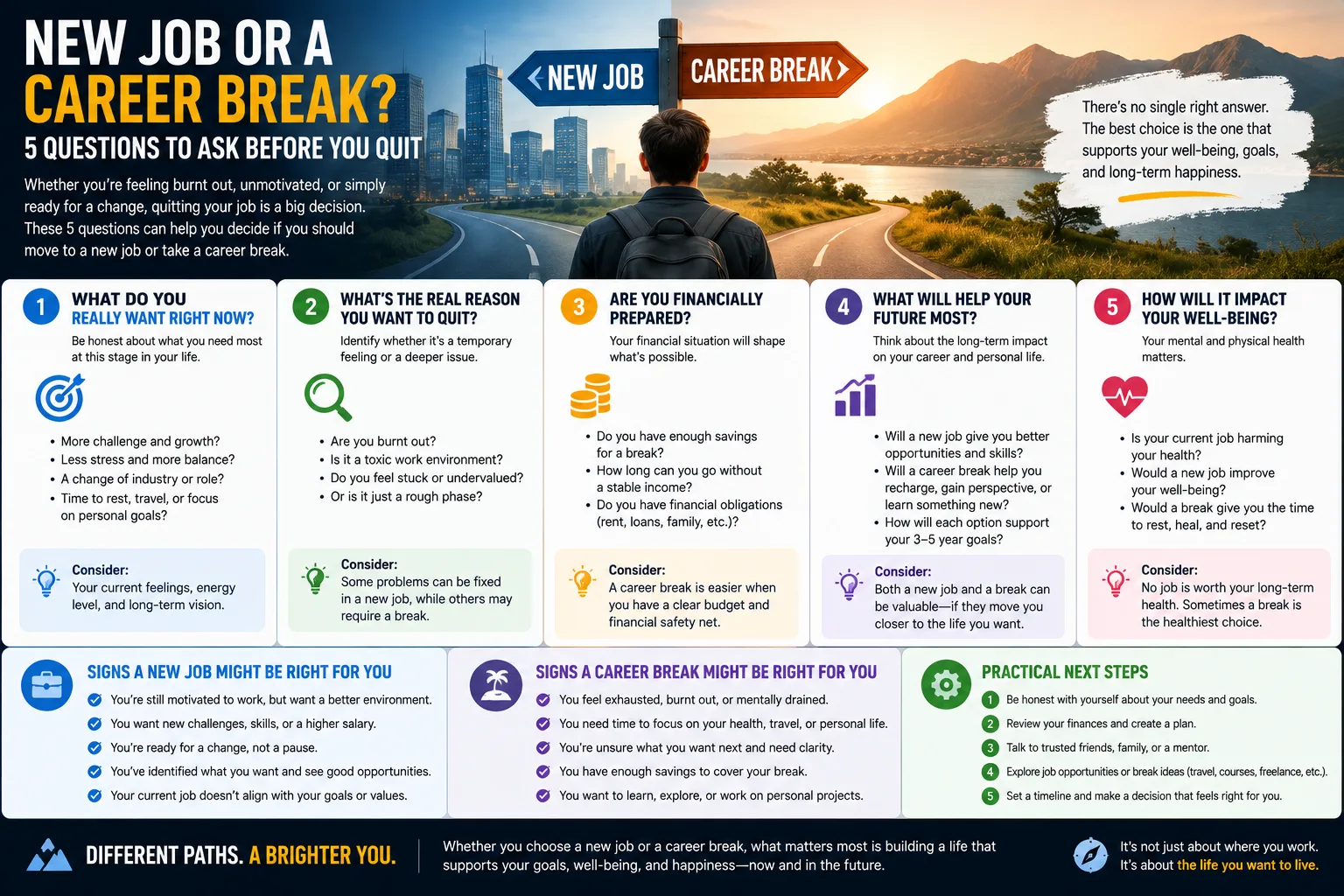
When work feels unbearable, “quit” can sound like the only answer. But exhaustion can make every decision feel urgent. A better first step is to separate the job itself from the conditions around it.
Is the problem the role or the company?
List the tasks that drain you, the parts you still value, and the conditions that make the work difficult. A different manager, team, schedule, or employer may solve a role-specific problem. If the same issue follows you across projects, a larger change may be needed.
Would time away change the decision?
A break cannot fix every workplace, but distance can reveal whether you miss the work or only the income, identity, and routine attached to it. Consider savings, health insurance, caregiving, and the effect on visa or benefit status before resigning.
What can you negotiate?
Flexible hours, a leave of absence, a reduced workload, or a transfer may create space without ending the employment relationship. Get any agreement in writing and check company policy and local law.
What evidence do you have?
Keep a short record of workload, sleep, physical symptoms, deadlines, and recovery time. This is not a diagnosis, but it can make a conversation with a manager, doctor, therapist, or career counselor more concrete.
What is your next safe step?
Do not make an irreversible decision while in immediate crisis if you can first create a small buffer. Update your resume, investigate alternatives, and speak with a trusted professional. If work is affecting your safety or mental health, seek qualified support promptly.
Fast Company’s profile of Anu Bharadwaj describes one person’s career break and return. It is useful context, not a universal formula.
Sources
Before making a change, check your notice period, health coverage, paid leave, savings, and any caregiving or visa obligations. A short written plan can make the next step safer and easier to discuss.