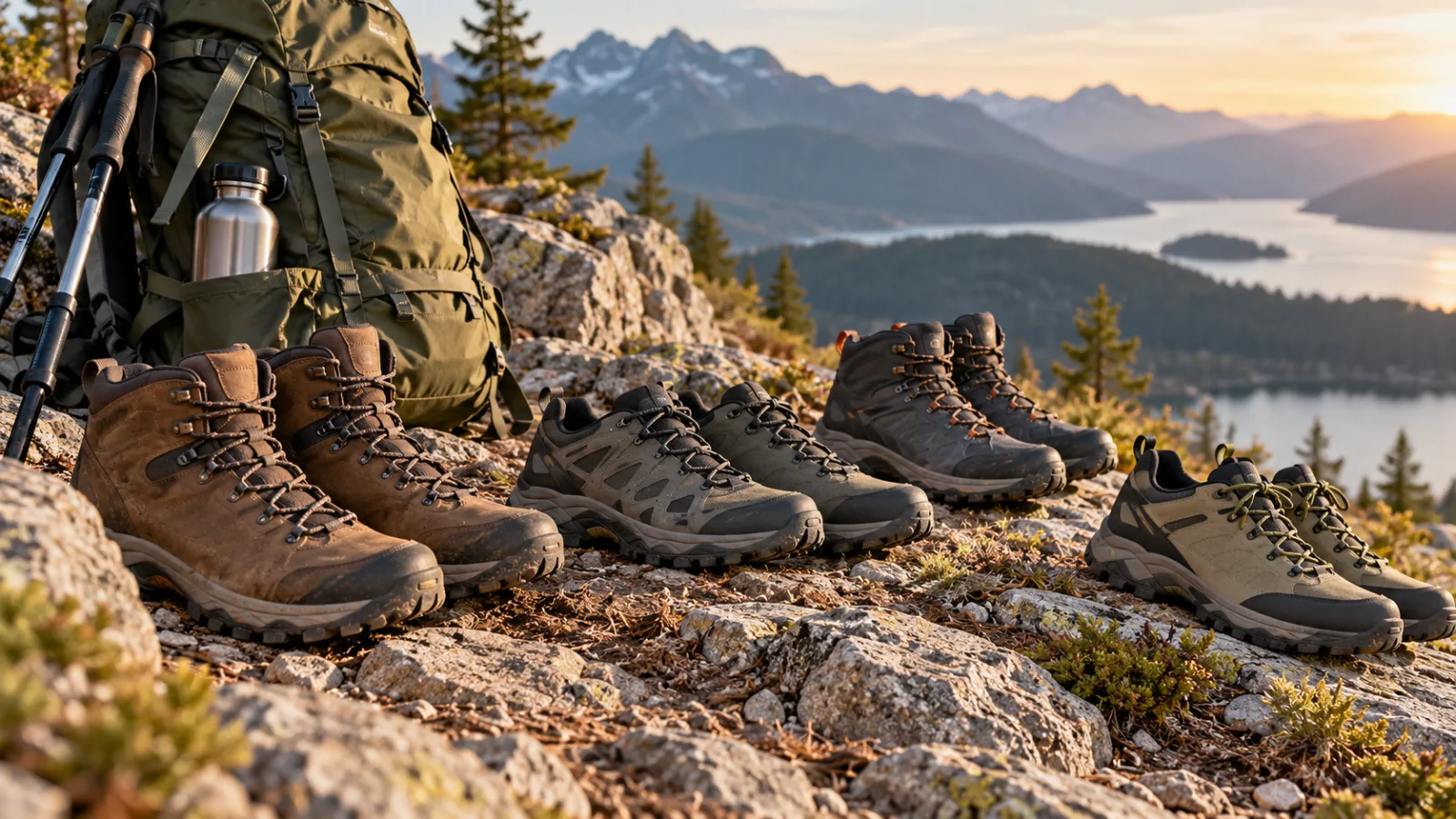
The right hiking footwear depends on the trail, weather, load, and your feet—not on whether a shoe is labeled a boot. Low-cut hikers can feel nimble, mid-height boots can add structure, and trail runners can be efficient for fast, lighter trips. None is universally best.
Start with fit
Your heel should stay secure without pressure, and your toes should have room to spread and move slightly downhill. Try footwear with the socks you will hike in. Walk down an incline if possible, and check that your toes do not hit the front.
Match traction to terrain
Lug shape and rubber compound matter more than an aggressive appearance. Smooth rock, mud, loose dirt, and wet roots demand different compromises. A grippy sole may wear faster, while a softer shoe can feel more comfortable but offer less protection under a heavy pack.
Waterproofing is a trade-off
Waterproof membranes can help in wet conditions, but they may reduce breathability and dry slowly after water gets inside. For hot weather or stream crossings where shoes will be soaked, fast-drying non-waterproof footwear may be more practical.
Choose support for the trip
A higher boot does not automatically prevent ankle injuries, and a low shoe is not automatically unsafe. Consider pack weight, terrain, balance, prior injuries, and personal comfort. Break in new footwear before a major trip, and never make the first long hike a gear test.
Backpacker’s source is a publisher testing roundup. Its testing claims and product awards belong to Backpacker and must not be presented as Majumedia testing. Any product recommendation, specification, price, or availability must be independently checked before publication.
Sources
Footwear also wears out: inspect the outsole, midsole, upper, and heel fit before a long trip. If the tread is worn or the shoe no longer holds the foot securely, replace it rather than assuming a familiar model will perform the same way indefinitely.