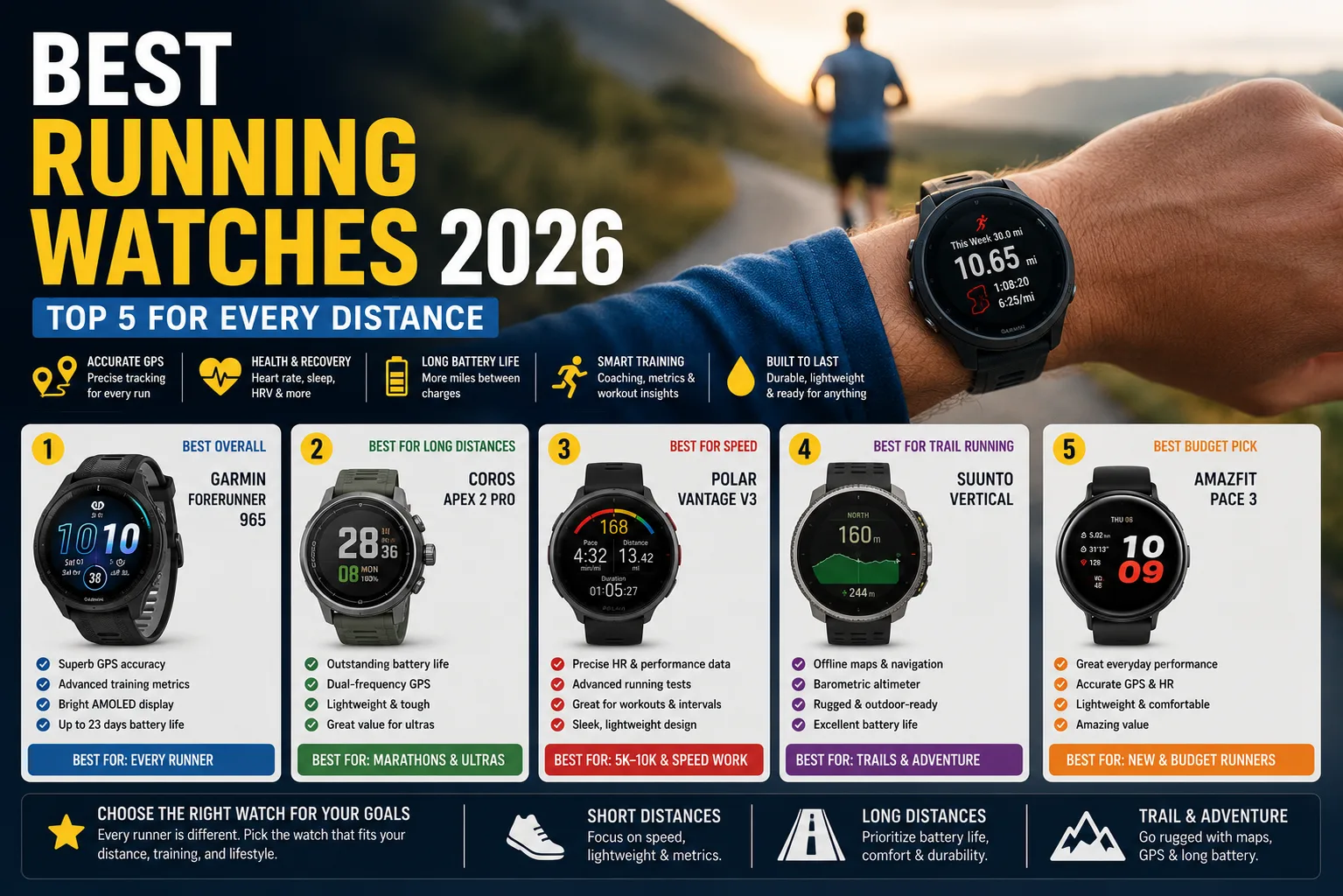
A running watch has two jobs: record where you went accurately, and tell you something useful about it afterwards. Everything else is negotiable. These five are separated less by hardware than by how much of your training they are willing to think about for you.
The top 5 at a glance
#
Watch
Price
GPS battery
Display
Best for
1
Garmin Forerunner 265
$510
20 hours
AMOLED
Most runners
2
Coros Pace 3
$295
38 hours
MIP
Value
3
Apple Watch Series 10
$537
~5 hours
AMOLED
Everyday smartwatch
4
Garmin Forerunner 965
$712
31 hours
AMOLED
Ultras
5
Polar Pacer Pro
$308
35 hours
MIP
Structured plans
1. Garmin Forerunner 265 — best overall
Affiliate disclosure: This article contains affiliate links. We earn a commission when you buy through our links, at no extra cost to you.
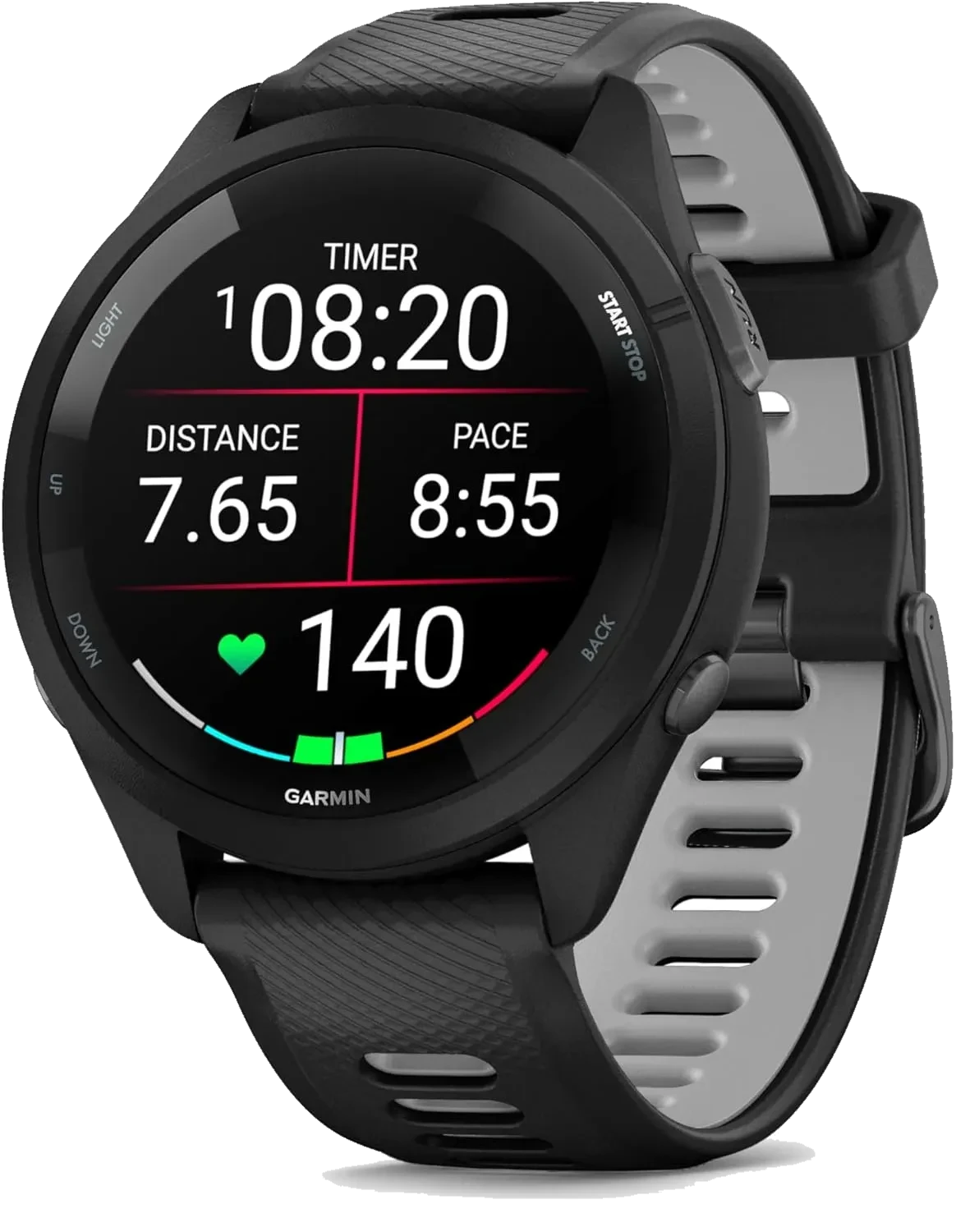
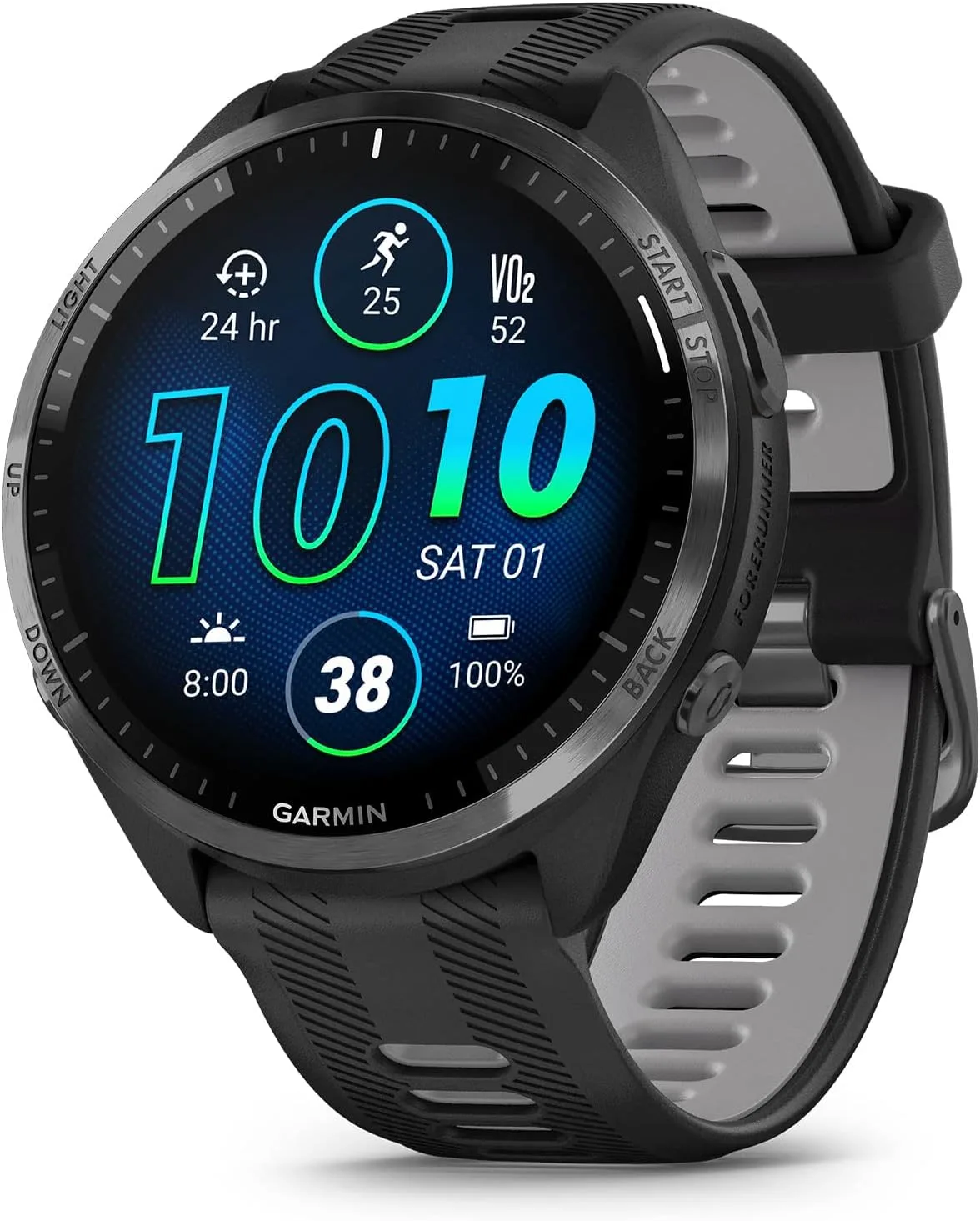
The 265 is where Garmin's training analysis meets a screen you enjoy looking at. Training readiness combines sleep, HRV and recent load into one morning number that is, unusually for this kind of metric, worth acting on.
Buy it if you run three or more times a week and want guidance, not just data. Overkill for occasional parkruns.
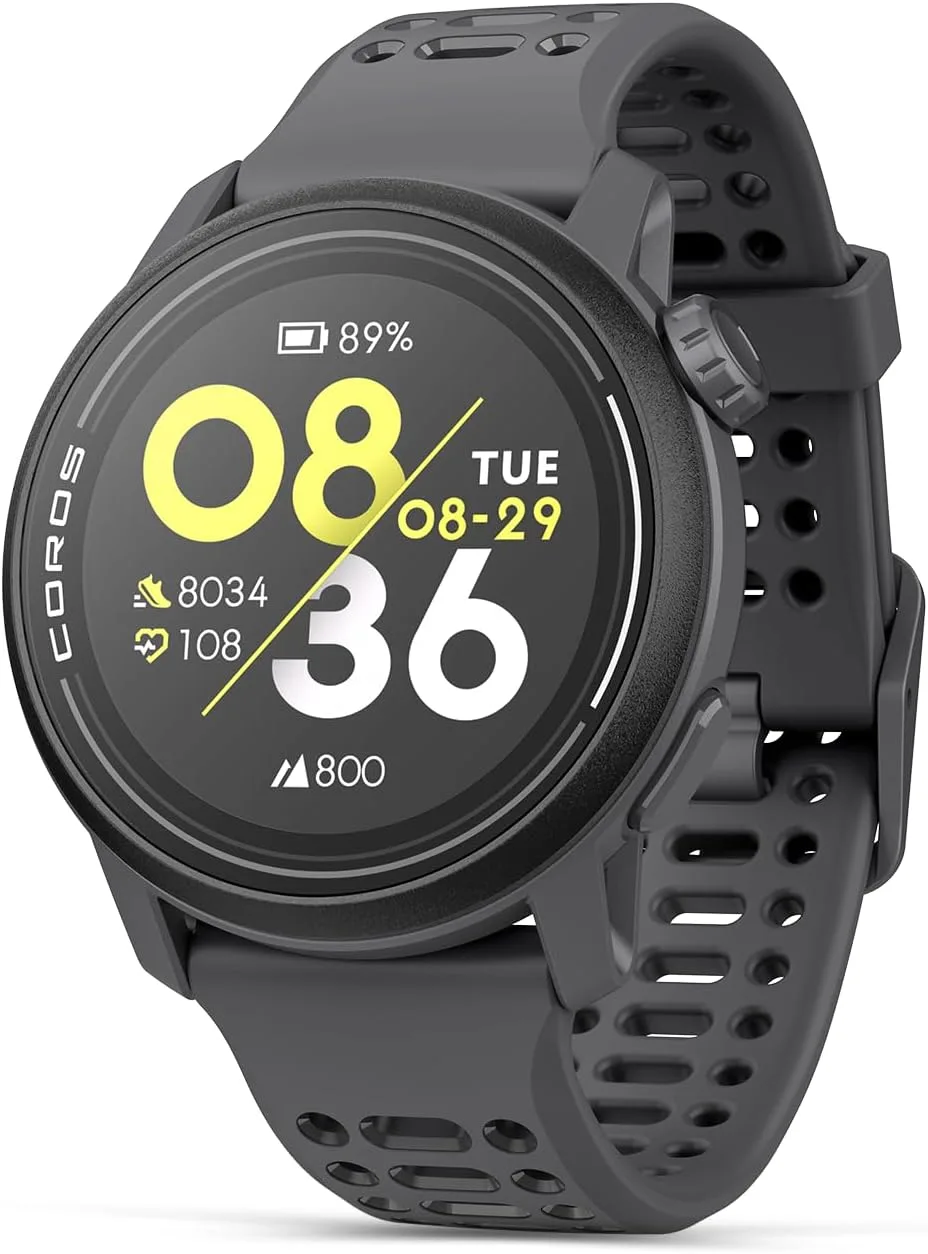
The Pace 3 offers dual-frequency GPS and 38 hours of GPS battery — figures that cost twice as much from Garmin two years ago. The software is less refined, but the hardware is not.
Buy it if you want accuracy and battery without paying flagship prices. The obvious first serious running watch.
3. Apple Watch Series 10 — best everyday smartwatch
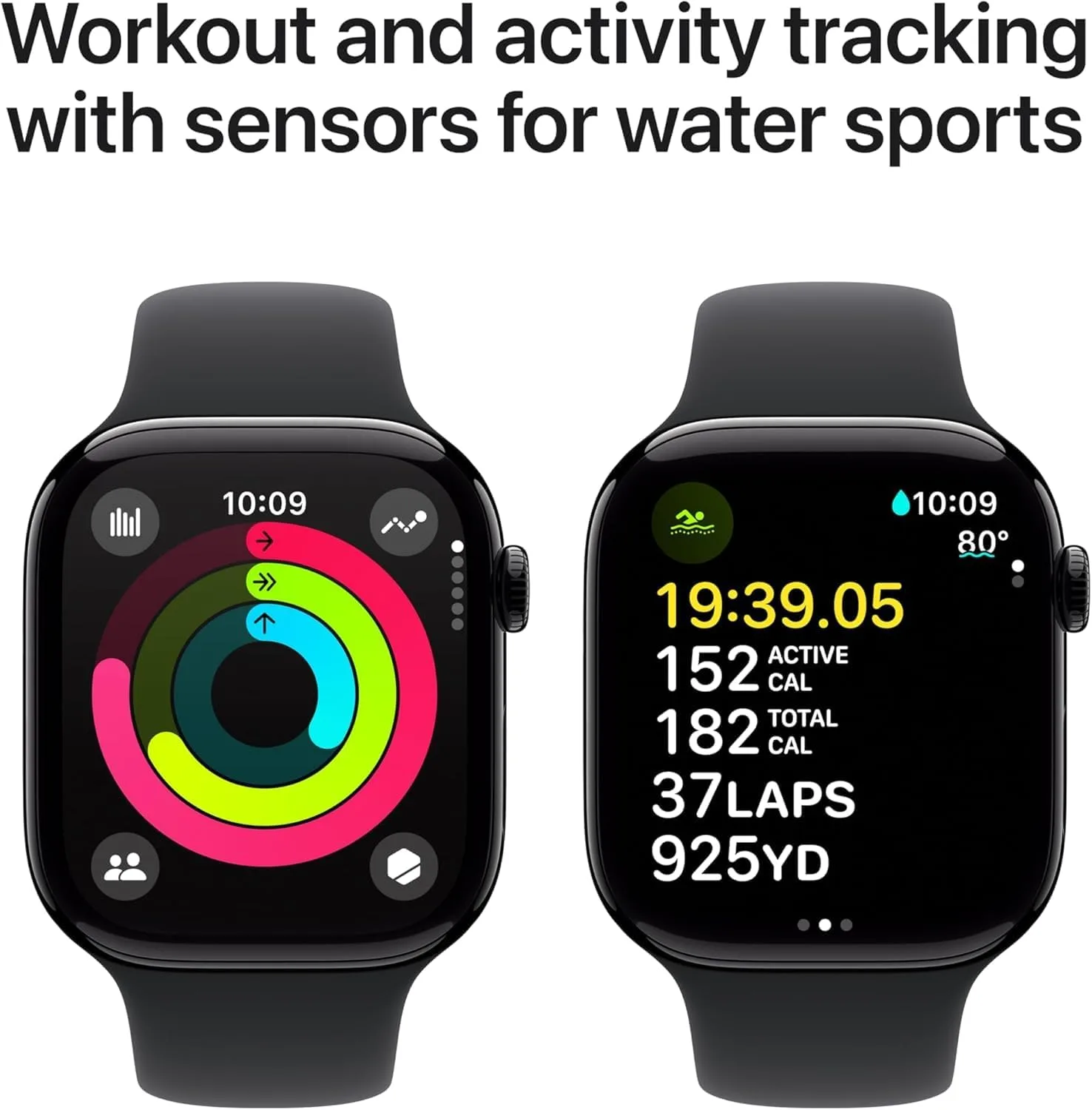
The best smartwatch that also runs. The health features are genuinely class-leading; the training analysis is not, and five hours of GPS rules out a slow marathon.
Buy it if you want one device for everything and run under two hours at a time.
The 965 adds proper mapping and roughly 50% more GPS battery than the 265. For anything over marathon distance, or navigating unfamiliar trails, those two things matter more than anything else on the spec sheet.
Buy it for ultras, multi-day events or trail navigation. For road running up to a marathon, the 265 does the same job for $200 less.
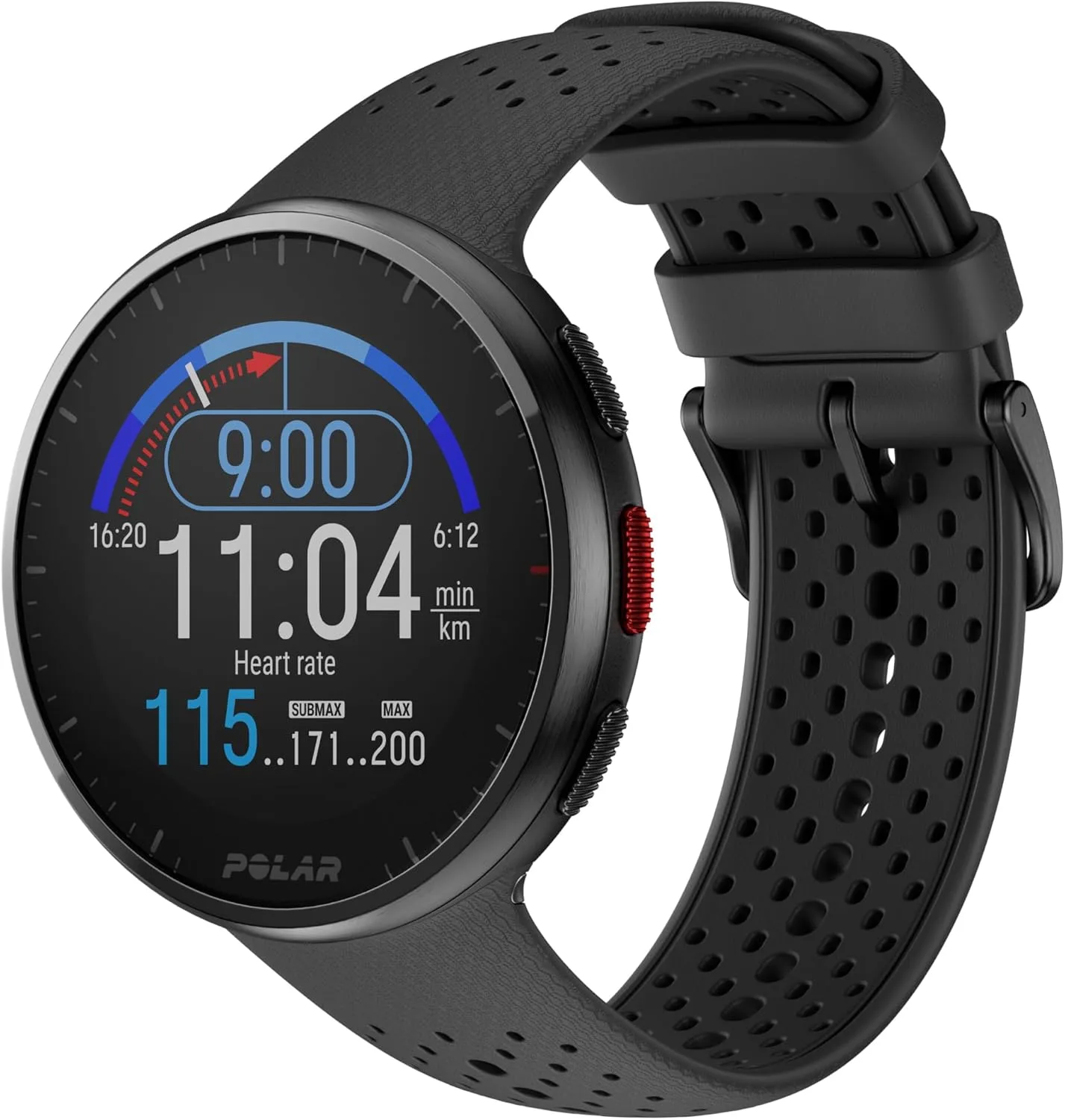
If you follow a written plan, Polar's on-watch workout guidance is the clearest here — it tells you the target for each interval and buzzes when you drift outside it.
Buy it if you train to a plan. Skip it if you mostly run by feel.
Which metrics actually matter
What to look for
1.
GPS accuracy
Dual-frequency (L1+L5) is the biggest recent upgrade. In cities and under trees it is the difference between believable pace and fiction.
2.
Battery in GPS mode
Smartwatch battery figures are marketing. GPS-on hours is the number that matters: under 15 rules out a slow marathon.
3.
Recovery metrics
HRV-based readiness scores are directionally useful for spotting overtraining. Treat them as a trend, not a daily instruction.
4.
Wrist heart rate limits
All wrist sensors struggle with intervals. If you train by heart rate zones, budget for a chest strap.
Claim
Dual-frequency GPS is the upgrade worth paying for.
Evidence
Single-frequency receivers rely on one satellite band that reflects off buildings, producing the classic 'ran through a wall' track. Dual-frequency receivers compare two bands and reject reflected signals, which is why urban pace readings stabilise.
Prices were correct at the time of writing and are re-checked automatically, but retailers change them often — confirm on the retailer's page before buying.
Do I need dual-frequency GPS?
If you run in a city or under tree cover, yes — it is the most noticeable accuracy improvement available. On open roads, single-frequency is fine.
Is a running watch better than a phone app?
For anything beyond casual jogging, yes. Wrist pace is instant, battery lasts far longer, and you get heart rate without strapping a phone to your arm.
How long should a running watch last?
Four to five years is realistic. Battery decline, not obsolete features, is usually what ends it.
Which is best for a beginner?
The Coros Pace 3. It has the accuracy and battery of far more expensive watches without overwhelming you with metrics.
Editor of Majumedia. I research and compare consumer tech, home, fitness and travel gear, digging through manufacturer specifications, warranty terms and long-term owner reports so buying guides reflect what a product is actually like to live with — not what the marketing says.
Tested recommendations, honest reviews — no fluff.
Maju Media
owner
Editor of Majumedia. I research and compare consumer tech, home, fitness and travel gear, digging through manufacturer specifications, warranty terms and long-term owner reports so buying guides reflect what a product is actually like to live with — not what the marketing says.