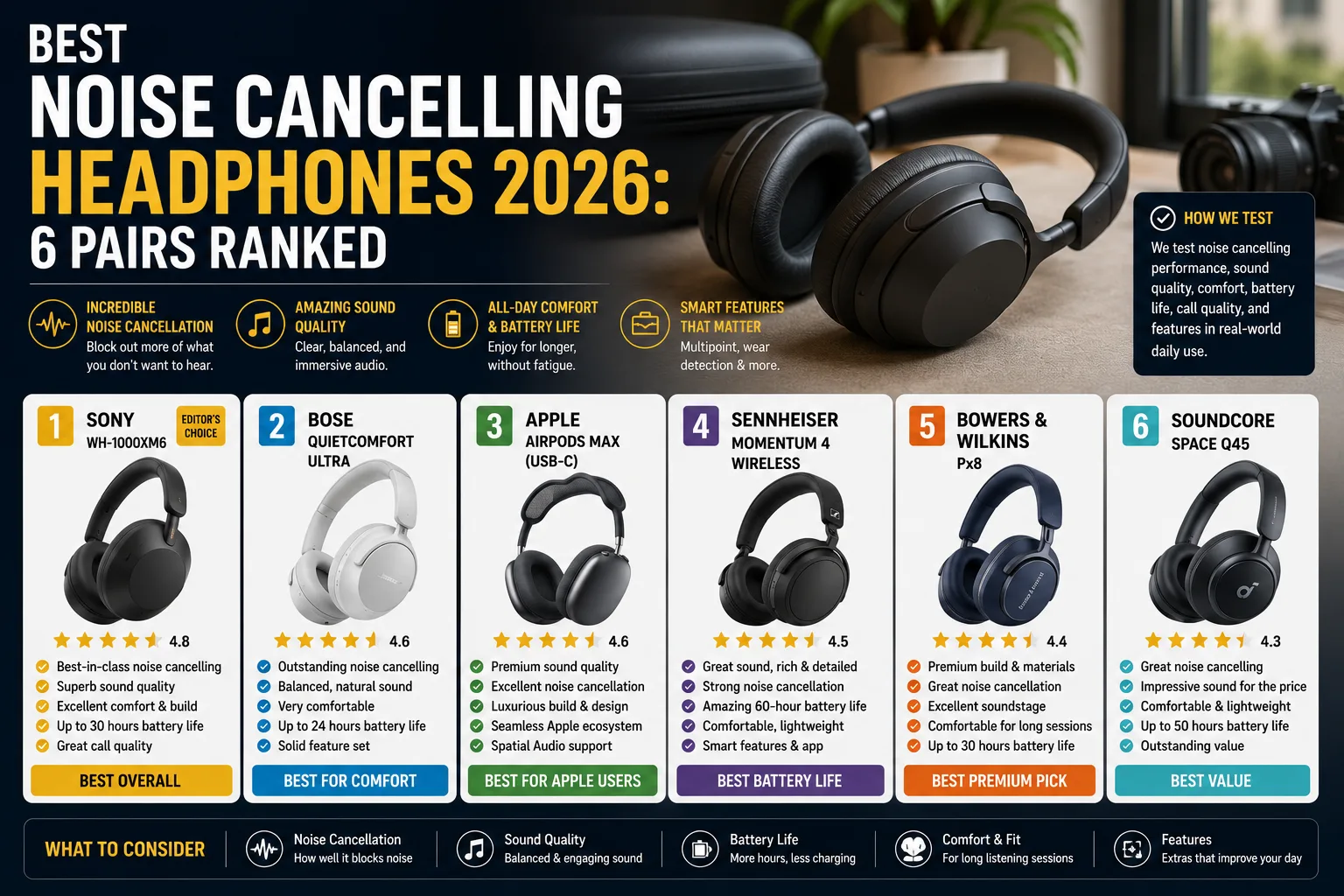
Active noise cancellation has stopped being a premium feature — competent ANC now costs under $125. What separates the top of this list from the bottom is everything around the cancellation: battery life, whether they pair to two devices at once, and whether you can wear them for a nine-hour flight without your ears aching.
The ranking at a glance
#
Headphones
Price
Battery (ANC)
Best for
1
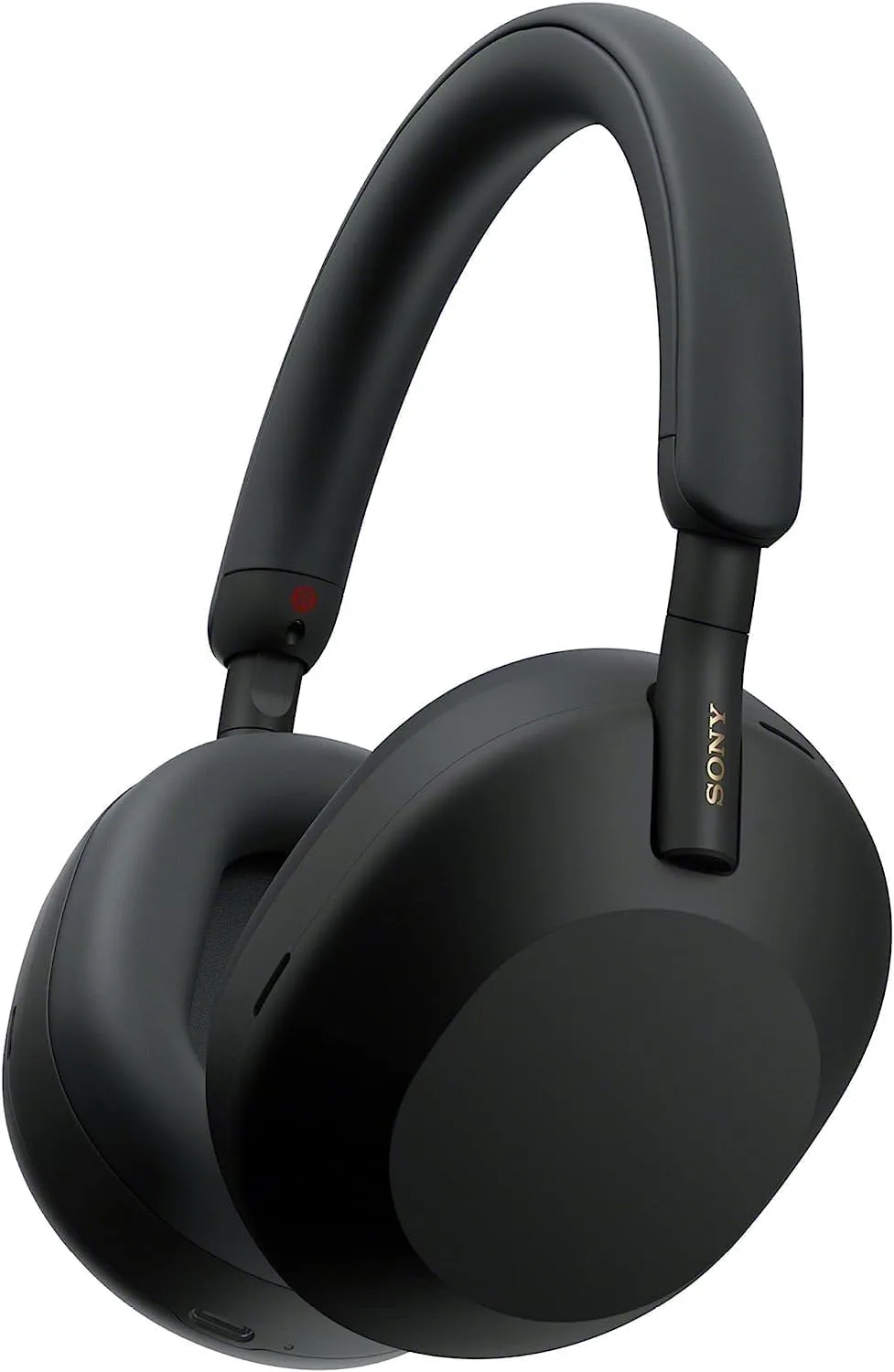
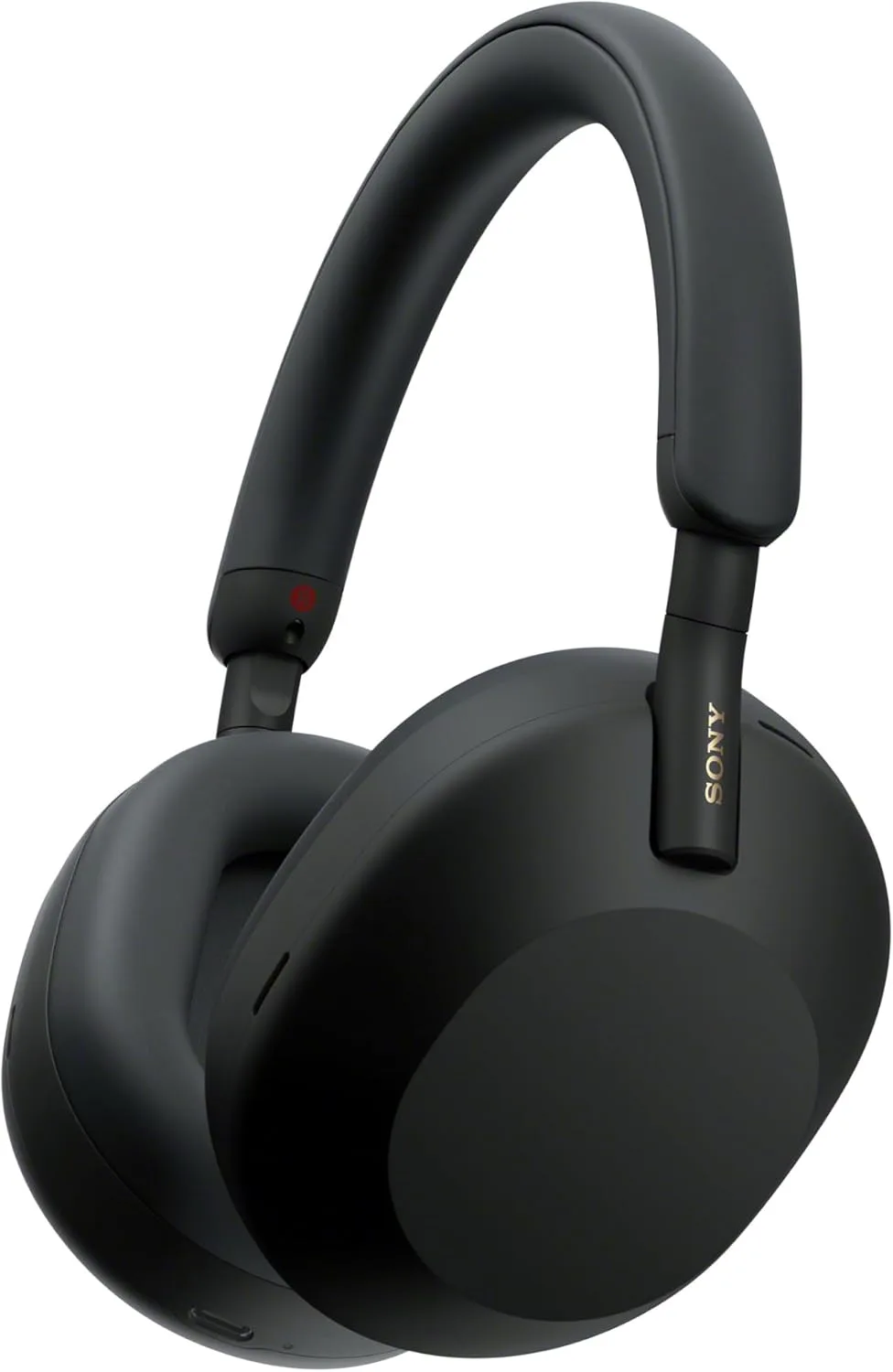
Sony WH-1000XM5
$376
30 hours
Most people
2
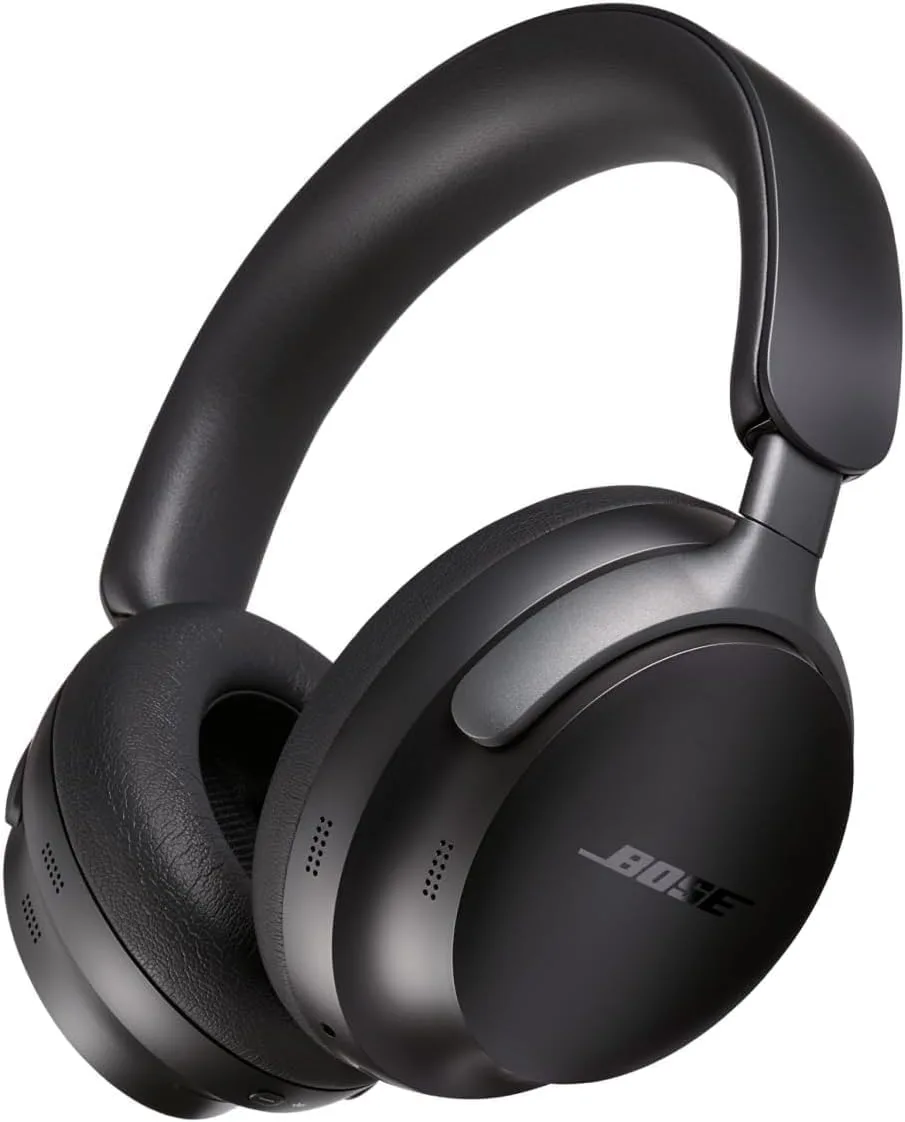
Bose QuietComfort Ultra
$402
24 hours
Flying
3
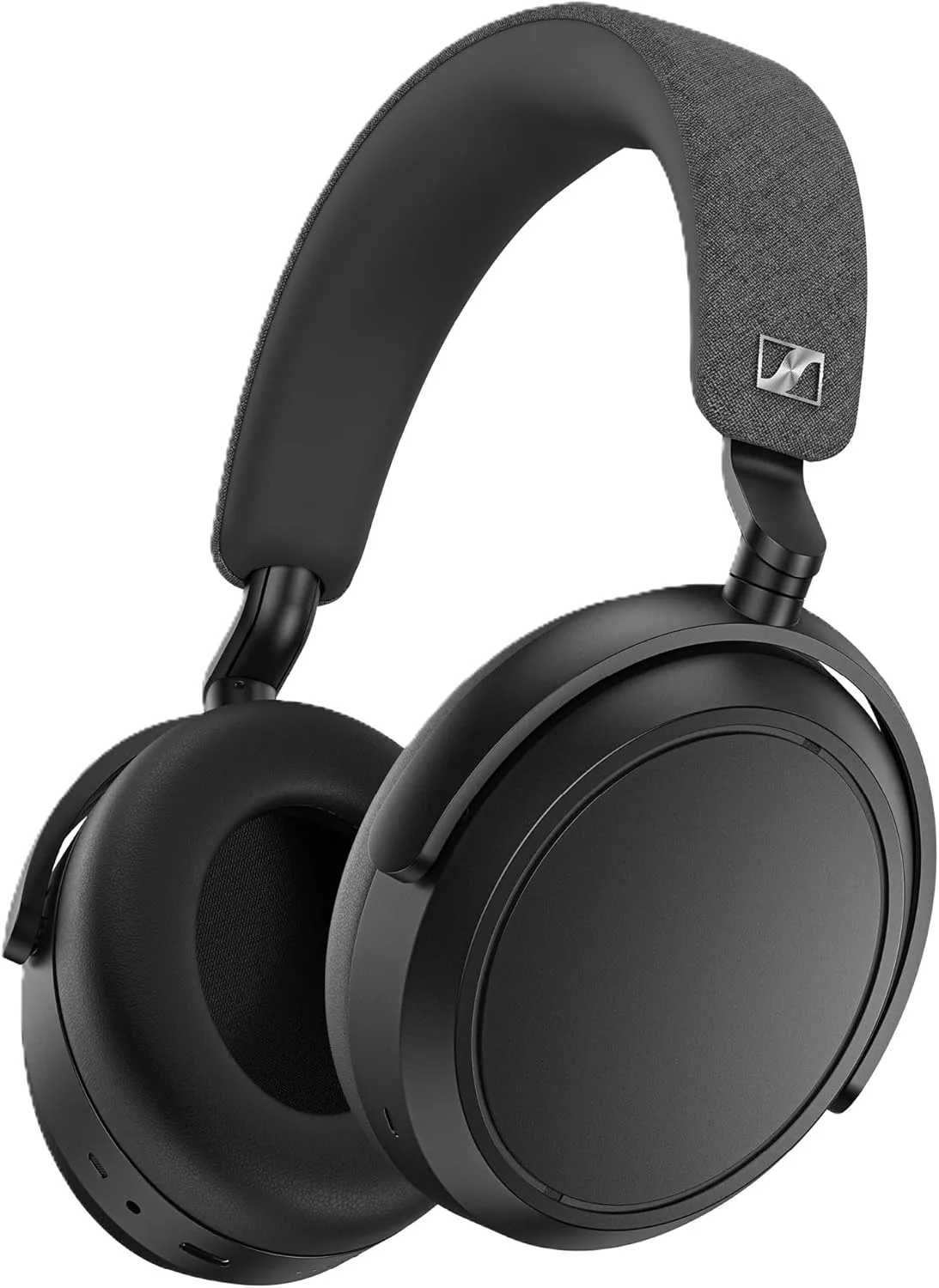
Sennheiser Momentum 4
$335
60 hours
Battery life
4
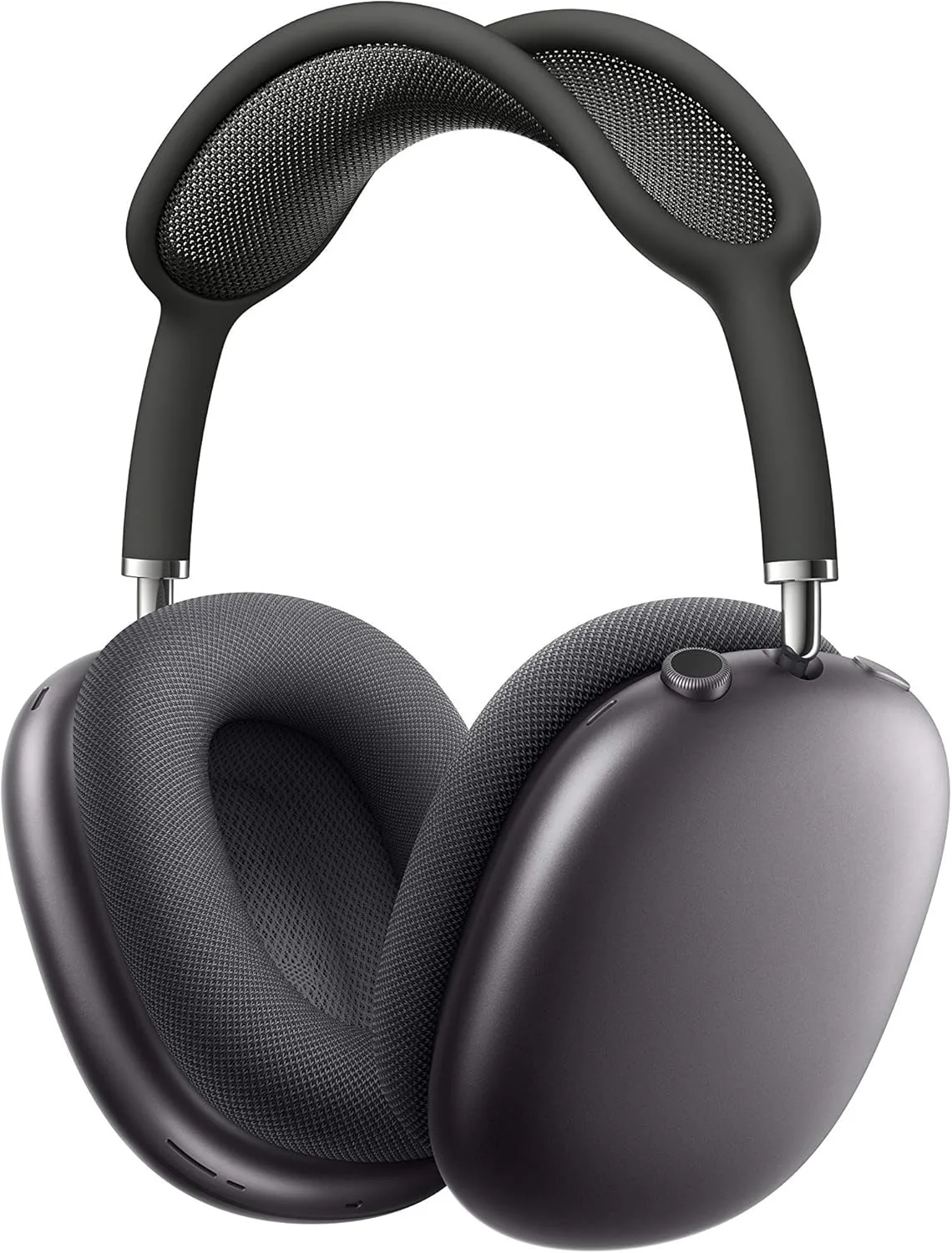
Apple AirPods Max
$604
20 hours
Apple users
5
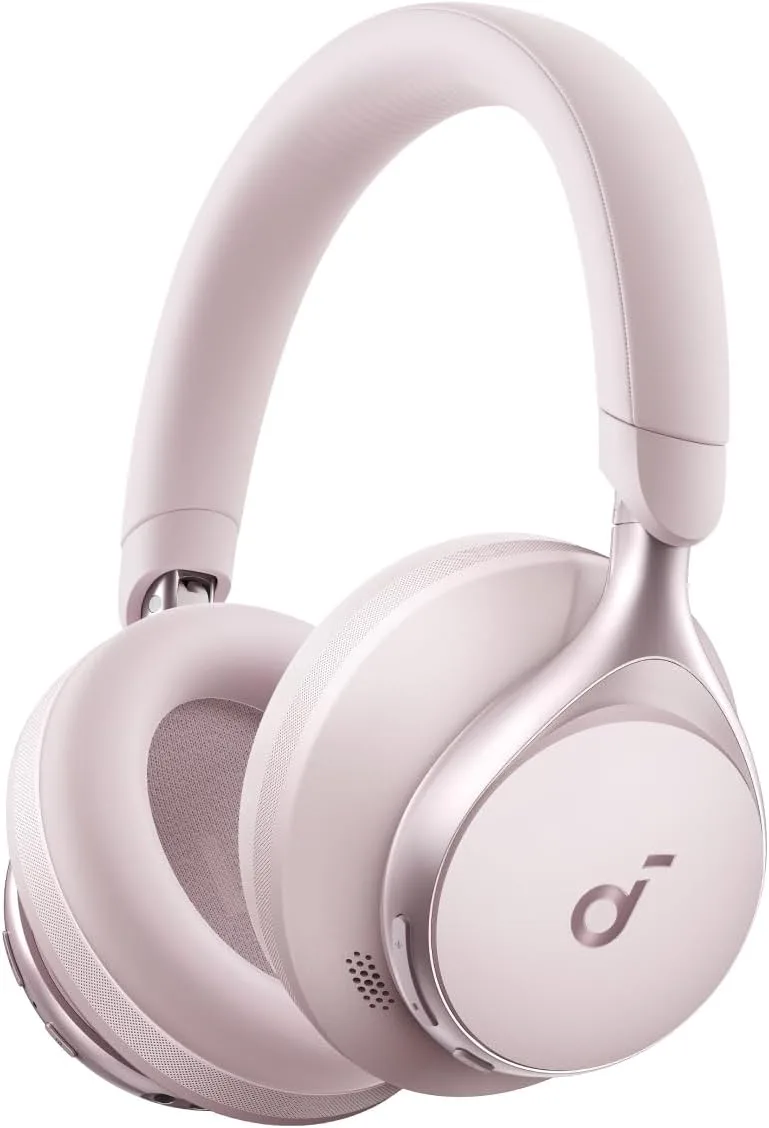
Anker Soundcore Space Q45
$160
50 hours
Under $200
6
Earfun Wave Pro
$93
55 hours
Under $100
Affiliate disclosure: This article contains affiliate links. We earn a commission when you buy through our links, at no extra cost to you.
The XM5 is a fraction behind Bose on aircraft drone and ahead of it everywhere else: six more hours of battery, better multipoint switching, and an app that adjusts both EQ and ANC behaviour based on where you are.
Buy them if you want one pair for commuting, calls and the occasional flight. Look elsewhere if you need something that folds into a jacket pocket.
If your headphones exist mainly to make aircraft cabins bearable, Bose still cancels low-frequency noise better than anything else. Engine drone genuinely disappears rather than being reduced.
Buy them if you fly monthly or more. For everyday commuting, the Sony is the better all-rounder for less.
Sixty hours means charging roughly once a month for typical commuting. The tuning is warmer and less clinical than Sony's, which many people prefer for long listening.
Buy them if you hate charging things or listen for hours daily. Avoid them if maximum cancellation is the priority.
Inside the Apple ecosystem the automatic switching between iPhone, iPad and Mac is genuinely seamless in a way rivals cannot match. Outside it, you are paying a large premium for AAC-only audio.
Buy them if you live in Apple devices and want the tightest integration. Anyone on Android or Windows should buy the Sony.
At this price the question is whether ANC exists at all. It does, and it takes the edge off a train carriage. That is a genuine achievement for under $100.
Buy them as a first pair, a gym pair, or something you would not cry about losing on a train.
How to choose
What to look for
1.
Where you'll use them
Aircraft and trains are low-frequency problems, which favours Bose. Offices are mid-frequency — voices — where Sony and Sennheiser do better.
2.
Battery honesty
Quoted figures assume ANC on at moderate volume. Halve them for loud listening with spatial audio enabled.
3.
Multipoint
If you switch between laptop and phone all day, multipoint matters more than a marginal ANC difference.
4.
Comfort over hours
Clamp force and earcup depth decide whether you can wear them all day, especially with glasses.
Prices were correct at the time of writing and are re-checked automatically, but retailers change them often — confirm on the retailer's page before buying.
Do noise cancelling headphones protect your hearing?
Indirectly. With background noise removed you listen at lower volume for the same detail, which is better for your ears over time.
Are earbuds as good as over-ears?
Close but not equal. The best earbuds rival mid-range over-ears; over-ears still lead on low-frequency cancellation and battery.
Is it worth spending over $400?
Only for frequent flyers or daily commuters. Under $200 buys most of the performance for occasional use.
Which has the best microphone for calls?
The Sony WH-1000XM5, by a clear margin — it uses beamforming across four of its eight microphones.
Editor of Majumedia. I research and compare consumer tech, home, fitness and travel gear, digging through manufacturer specifications, warranty terms and long-term owner reports so buying guides reflect what a product is actually like to live with — not what the marketing says.
Tested recommendations, honest reviews — no fluff.
Maju Media
owner
Editor of Majumedia. I research and compare consumer tech, home, fitness and travel gear, digging through manufacturer specifications, warranty terms and long-term owner reports so buying guides reflect what a product is actually like to live with — not what the marketing says.