Affiliate disclosure: we may earn a commission when you buy through links on this page. It never changes which cards we recommend or where they rank.
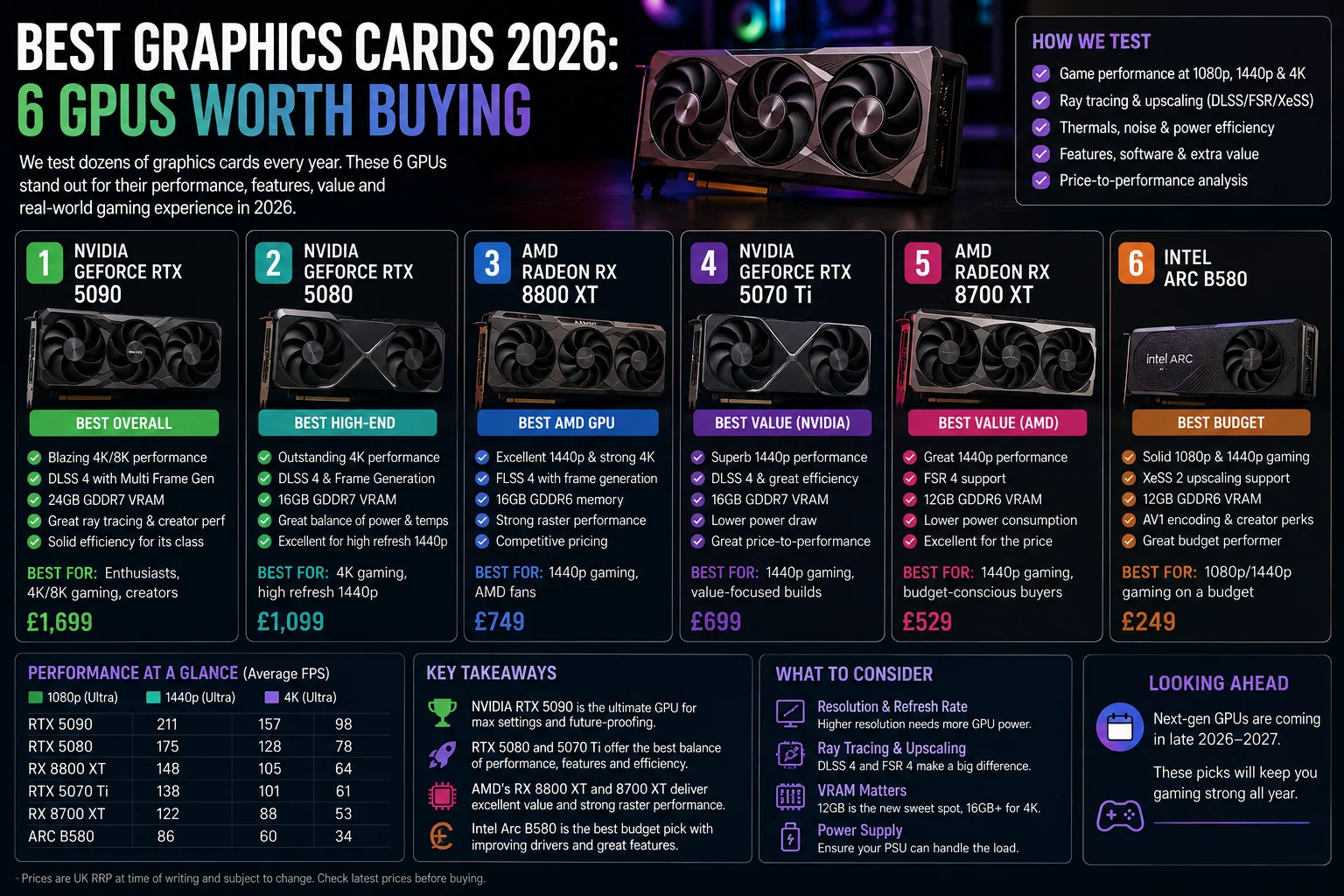
Picking the best graphics cards 2026 has less to do with benchmarks than it used to and much more to do with timing. A memory shortage driven by AI data-centre demand has pushed VRAM costs up all year, and the card you priced last month may well cost more today. This guide cuts through that. Below are six GPUs that still make sense at their current street prices, the resolutions each one actually suits, how much VRAM you need before games outgrow your card, and the models we would not touch right now at any price. Every price is the lowest widely available US price at the time of writing, set next to the launch MSRP so you can see exactly how far the market has drifted.
Why GPU prices are rising again in 2026
The short version: gaming graphics cards are competing for memory with AI accelerators, and gaming is losing. High-speed GDDR6 and GDDR7 modules are the single biggest cost increase on a modern card, and the same fabs supplying gaming GPUs are fielding enormous orders for data-centre hardware. Industry tracking suggests NVIDIA has been allocating memory according to how much revenue it can extract per gigabyte, which is why cards with modest VRAM are the easiest ones to find near MSRP while 16GB and 32GB models drift furthest from their launch pricing.
The knock-on effects have been arriving steadily. Reported hikes of 20% to 30% have rolled through NVIDIA's consumer range more than once this year, AMD has followed rather than absorb the difference, and regional pricing has moved even harder — RTX 50 series pricing in South Korea has jumped by up to 30%, and distributors in Japan have warned of further increases. Gigabyte cards are rumoured to be in line for a rise somewhere between 20% and 40%. Retail has become genuinely unstable: one widely reported case saw a $4,429 order for an ROG Astral RTX 5090 cancelled after a late price increase.
None of this suggests relief is coming soon. Discounts have largely evaporated, so the usual advice to wait for a seasonal sale carries much less weight than it did a year ago.
Should you buy a graphics card now or wait?
Buy now if your current card is genuinely holding you back, if you are building a new PC, or if you have been eyeing a specific model that is still close to its launch price. The reason is straightforward: the pricing pressure here is structural rather than seasonal. Memory contracts are set months ahead, so even a fast recovery in supply would take a long time to reach shelf prices.
Wait if you already own something from the RTX 40 or RX 7000 generation that still clears your target frame rate, or if the only card you want is a halo product like the RTX 5090. Waiting also makes sense if you can be flexible on brand — the value on offer moves week to week between NVIDIA and AMD, and being willing to buy either roughly doubles your chances of catching a card at a sensible number.
What we would not do is hold out for the next generation. Nothing about the current memory market suggests a new launch would arrive at friendly pricing, and you would be gambling a year of worse performance on it.
Best graphics cards 2026 at a glance
| Graphics card | Best for | VRAM | Street price | Launch MSRP |
|---|---|---|---|---|
| AMD Radeon RX 9070 XT | Best overall value, 1440p and entry 4K | 16GB GDDR6 | $719 | $599 |
| NVIDIA GeForce RTX 5070 Ti | Best high-end card you can still justify | 16GB GDDR7 | $989 | $749 |
| NVIDIA GeForce RTX 5070 | Best NVIDIA all-rounder for 1440p | 12GB GDDR7 | $629 | $549 |
| AMD Radeon RX 9060 XT 16GB | Best mid-budget 1440p card | 16GB GDDR6 | $469 | $349 |
| AMD Radeon RX 7900 XTX | Best cheap route to 24GB and 4K | 24GB GDDR6 | $929 | $999 |
| NVIDIA GeForce RTX 5060 | Best budget 1080p card | 8GB GDDR7 | $349 | $299 |
Prices are the lowest widely available US listings at the time of writing and move frequently in the current market. Check the live price before buying.
The 6 best graphics cards to buy in 2026
1. AMD Radeon RX 9070 XT — best overall value
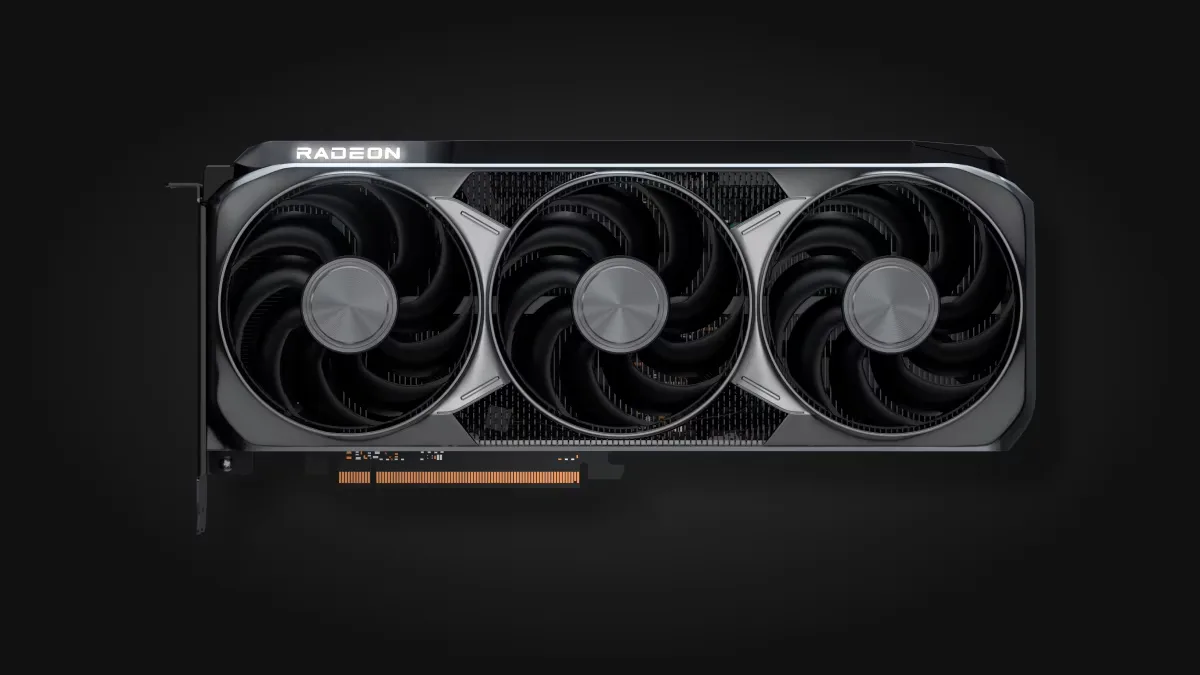
The RX 9070 XT is the card we recommend to most people building or upgrading this year. It pairs 64 compute units with 16GB of GDDR6 on a 256-bit bus and boosts up to 2,970MHz, which is enough to sit comfortably above the 60fps mark at 4K in a lot of current titles — AMD's own figures put it at 73fps in Arc Raiders, 82fps in Call of Duty: Black Ops 7 and 72fps in Horizon Forbidden West at 4K Ultra. At 1440p it has real headroom to spare.
It is not immune to the market, and at $719 it sits well above its $599 launch price. But that premium is smaller in percentage terms than most of the NVIDIA range, and the 16GB buffer means you are not buying a card that will be memory-limited in two years. Ray tracing is much improved over AMD's previous generation, though NVIDIA still leads in the heaviest path-traced titles.
Pros
- 16GB of VRAM at a mid-range price point
- Genuine 4K capability in most current games
- Smaller gap between street price and MSRP than most rivals
Cons
- Still trails NVIDIA in heavy path tracing
- Higher board power than the RTX 5070
Check the current RX 9070 XT price
2. NVIDIA GeForce RTX 5070 Ti — best high-end card you can still justify
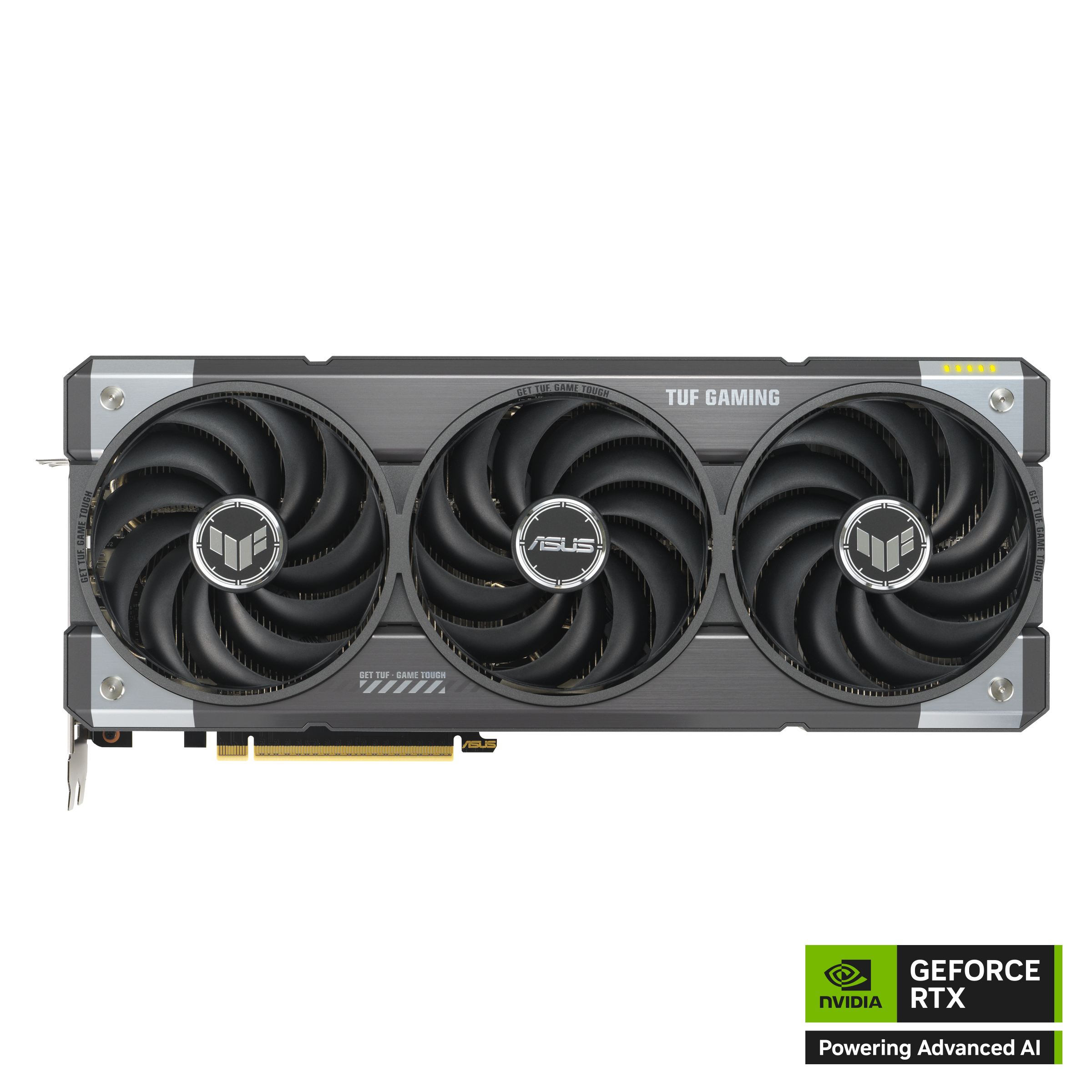
If you want a high-end NVIDIA card without stepping into four-figure absurdity, the RTX 5070 Ti is where the line sits in 2026. Sixteen gigabytes of GDDR7 on a 256-bit bus, the full Blackwell feature set including DLSS 4.5 with multi-frame generation, and enough raw throughput for high-refresh 1440p or a very solid 4K experience with upscaling enabled.
The catch is supply. This is exactly the kind of higher-VRAM SKU that has been hardest hit by memory allocation, so $989 against a $749 MSRP is the reality rather than a bad listing. It is still the most sensible high-end buy on the board, because the next rung up the NVIDIA ladder has become indefensible.
Pros
- Best ray tracing and upscaling package at this level
- 16GB GDDR7 keeps it viable for years
- Strong 4K performance with DLSS enabled
Cons
- Roughly $240 above launch pricing
- Availability comes and goes
Check the current RTX 5070 Ti price
3. NVIDIA GeForce RTX 5070 — best NVIDIA all-rounder
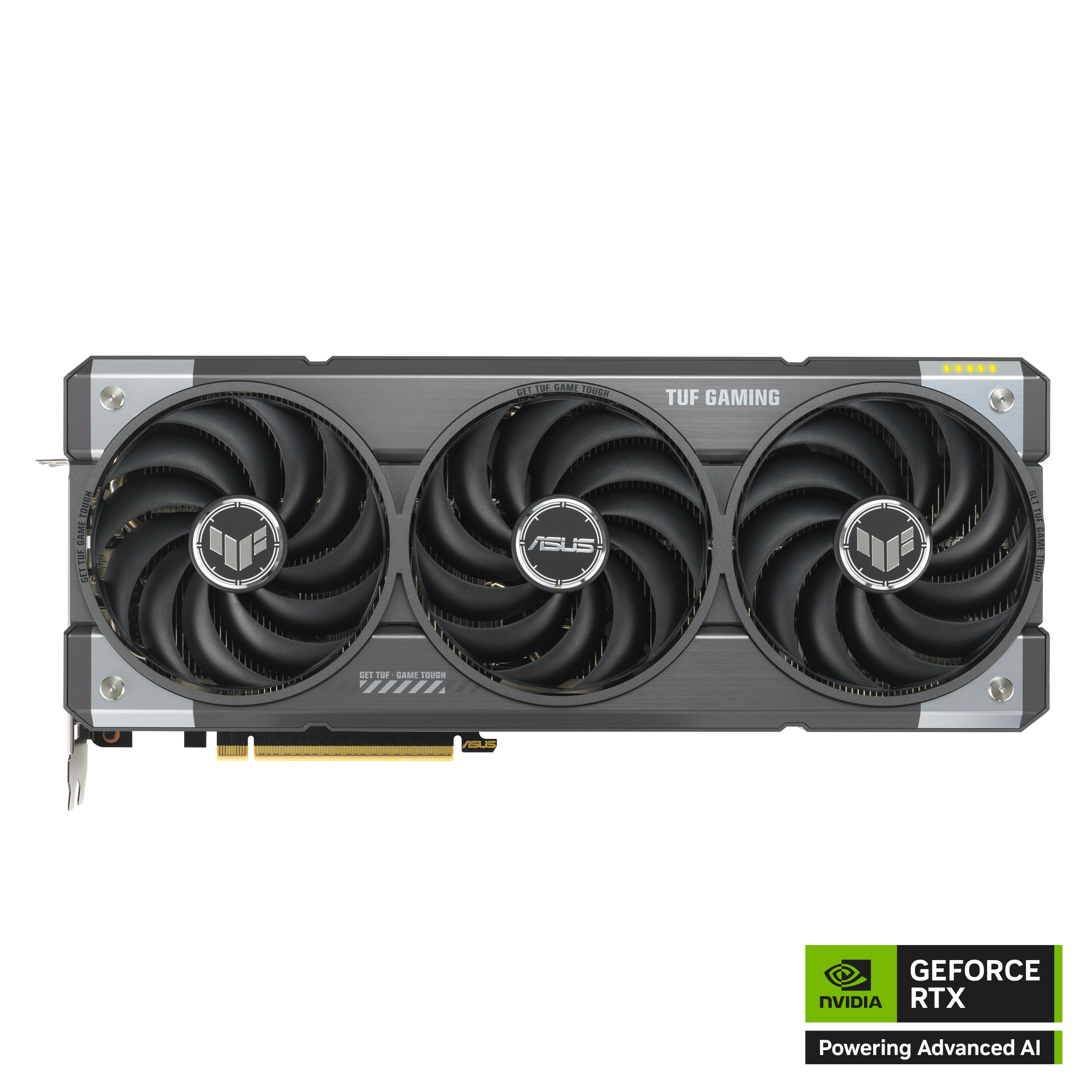
At $629 against a $549 MSRP, the RTX 5070 has held its pricing better than almost anything else in NVIDIA's range, which makes it the easiest Team Green recommendation right now. You get 12GB of GDDR7, the same DLSS 4.5 and Reflex 2 feature set as the more expensive cards, and comfortable high-refresh 1440p performance.
The 12GB buffer is the honest limitation. It is fine today and will stay fine at 1440p for a good while, but it is not the card to buy if you intend to run 4K with maximum textures for the next four years. If your monitor is 1440p and you value frame generation and ray tracing, this is the sweet spot.
Pros
- Closest to MSRP of any current NVIDIA card
- Full DLSS 4.5 and multi-frame generation support
- Efficient and easy to cool
Cons
- 12GB will limit long-term 4K use
- Beaten on raw rasterisation by the RX 9070 XT
Check the current RTX 5070 price
4. AMD Radeon RX 9060 XT 16GB — best mid-budget 1440p card
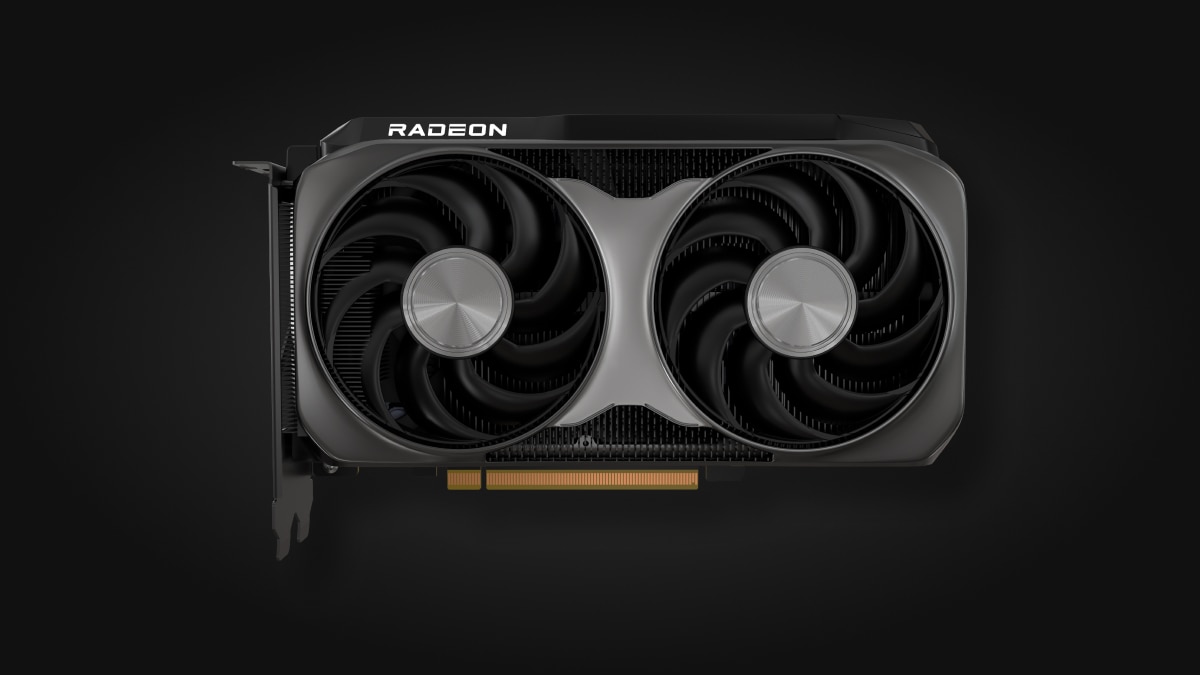
This is the value pick for anyone who refuses to spend more than about $500. The 16GB version of the RX 9060 XT runs 32 compute units, boosts up to 3,130MHz and — crucially — carries a full 16GB of GDDR6, albeit on a narrower 128-bit bus. AMD quotes 75fps in Arc Raiders, 86fps in Call of Duty: Black Ops 7 and 84fps in GTA V Enhanced with ray tracing at 1440p Ultra.
At $469 it is a long way from its $349 MSRP, which stings. But look at what else $469 buys: mostly 8GB cards. Paying for memory capacity at this tier is the single best future-proofing decision available, and it is why we steer people here rather than to the 8GB variant sitting $90 below it.
Pros
- 16GB of VRAM well under $500
- Very low power draw for the performance
- Strong 1440p results in current titles
Cons
- 128-bit memory bus limits headroom at 4K
- Large markup over launch pricing
Check the current RX 9060 XT 16GB price
5. AMD Radeon RX 7900 XTX — best cheap route to 24GB
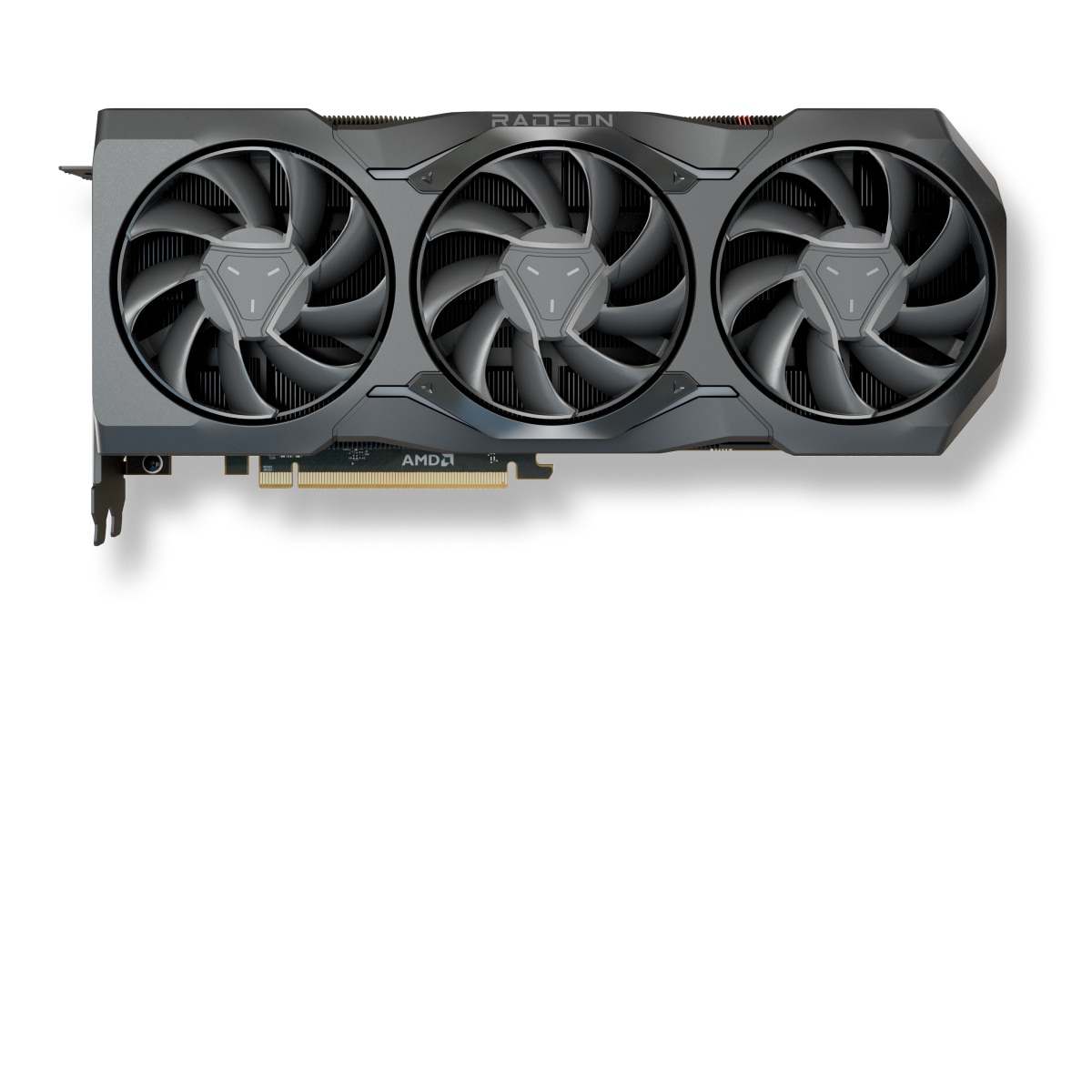
The oddity of this market is that a previous-generation flagship is now one of its better deals. The RX 7900 XTX still carries 24GB of GDDR6 on a 384-bit bus, and at $929 it is actually below its $999 launch price — something almost nothing else on this list can claim. For 4K rasterised gaming, high-resolution texture packs, or local AI workloads that simply need memory, it remains excellent.
You are buying older technology, so ray tracing is a generation behind and you miss AMD's newest upscaling improvements. Availability is also thinning as production has wound down, so check the seller carefully rather than assuming every listing is a first-party retailer.
Pros
- 24GB of VRAM for under $950
- Currently priced below its original MSRP
- Excellent raw 4K rasterisation
Cons
- Older ray tracing and upscaling
- Stock is drying up and third-party listings are common
Check the current RX 7900 XTX price
6. NVIDIA GeForce RTX 5060 — best budget 1080p card
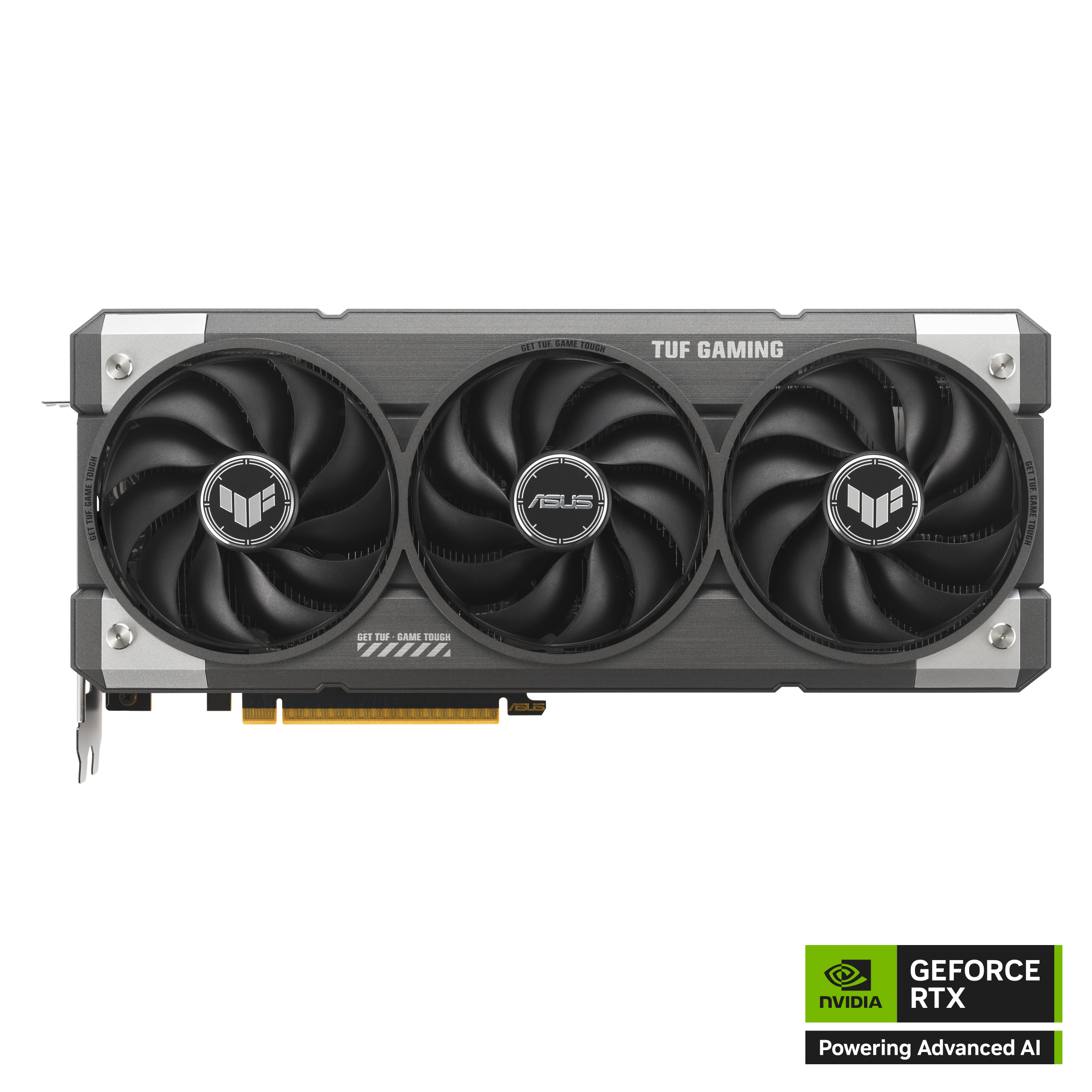
If the budget is genuinely tight, the RTX 5060 at $349 is the least compromised cheap option. Because lower-VRAM cards have been prioritised in the current allocation squeeze, this is one of the few models still sitting close to its $299 MSRP and actually in stock. For 1080p at high settings, with DLSS 4.5 doing some of the work, it is perfectly capable.
Eight gigabytes is the ceiling on ambition here, and we would not buy this card for 1440p Ultra or expect it to age gracefully. Treat it as a solid 1080p card for today rather than a long-term investment, and spend the extra on the RX 9060 XT 16GB if you can stretch.
Pros
- One of very few cards near MSRP
- Reliably in stock
- DLSS 4.5 support helps it punch above its weight
Cons
- 8GB of VRAM limits its useful life
- Not a 1440p Ultra card
Check the current RTX 5060 price
How much VRAM do you need in 2026?
VRAM is the deciding factor in this generation, because it is the component the shortage is squeezing. Our working guidance: 8GB is workable for 1080p if you accept turning textures down in some newer titles; 12GB is the practical floor for 1440p; 16GB is what you want if you intend to keep the card for four or more years or play at 4K; and 24GB or more only matters for 4K with maximum textures, heavy modding, or local AI work.
The trap to avoid is paying a 2026 price for a 2023 amount of memory. There are 8GB cards listed near and above $400 right now, and they are poor value next to 16GB alternatives only slightly higher up the range. When two cards are close in price, take the one with more memory.
Which GPU for 1080p, 1440p and 4K?
For 1080p high-refresh gaming, the RTX 5060 covers it and the RX 9060 XT 16GB gives you room to grow. For 1440p, which is where most people should be aiming, the RTX 5070 and RX 9070 XT are the two to weigh against each other — pick the NVIDIA card if ray tracing and frame generation matter to you, the AMD card if raw performance per dollar and memory capacity do. For 4K, the RX 9070 XT is the entry point, the RTX 5070 Ti is the comfortable option with upscaling, and the RX 7900 XTX is the memory-rich bargain if you can live with older ray tracing.
Graphics cards to skip right now
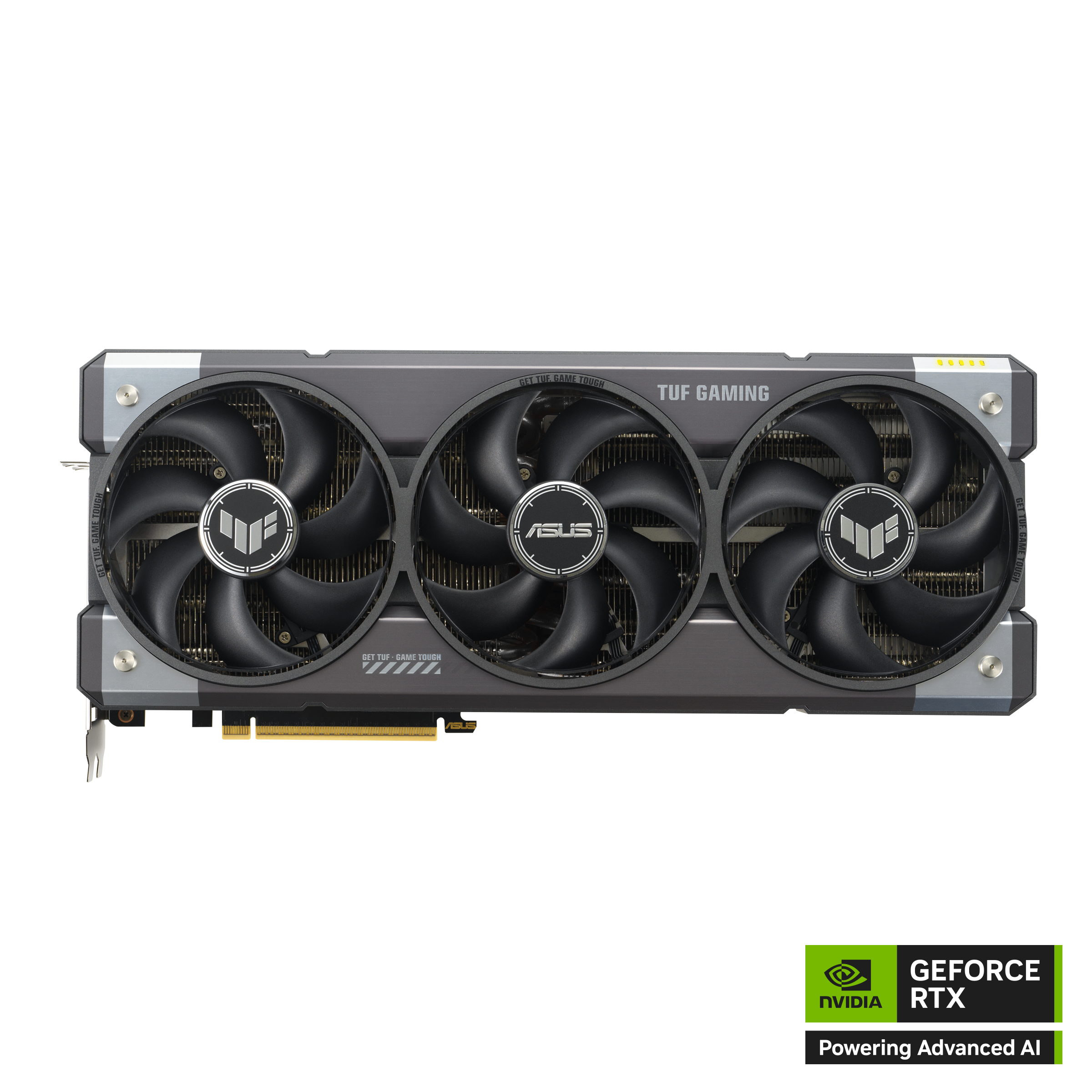
The RTX 5090. It is the fastest consumer GPU available and it is not remotely worth buying at current pricing. The lowest widely available listing is around $4,381 against a $1,999 launch MSRP — more than double. Its 32GB of GDDR7 makes it the single worst-affected card in the memory crunch, and reports of cancelled orders and mid-transaction price changes make it a frustrating purchase even when you can find one.
New RTX 40 series cards. Production has ended, so anything still listed is either old stock at inflated pricing or second-hand and possibly ex-mining. An RTX 4070 at $729 makes no sense when an RTX 5070 costs $629. If you want a 40 series card, buy it used, knowingly, and at a used price.
Any 8GB card over about $400. The 8GB RX 9060 XT at $379 and the 8GB RTX 5060 Ti at $429 are the clearest examples. Add a little more and get 16GB instead.
How we picked
We started from current US street pricing rather than MSRP, because MSRP has stopped being a useful reference point in this market. Each card was then judged on performance per dollar at its actual price, VRAM capacity relative to that price, feature set including upscaling and ray tracing, and real availability from first-party retailers rather than marketplace sellers. First-party performance figures from AMD and NVIDIA are cited as manufacturer claims, not as independent test results. Pricing was checked against published GPU price tracking on the date shown below, and we re-check this guide monthly because the numbers move.
Frequently asked questions
What graphics card should I buy in 2026?
For most people, the AMD Radeon RX 9070 XT at around $719. It offers 16GB of VRAM, handles 1440p easily and manages 4K in most current games, and its markup over launch pricing is smaller than most competing cards. If you prefer NVIDIA, the RTX 5070 at about $629 is the best-value option in that range.
Are GPU prices expected to go up in 2026?
Yes, and they already have several times. Reported increases of 20% to 30% have moved through NVIDIA's consumer line more than once this year, AMD has followed, and further regional hikes have been flagged in Asia. The underlying cause is memory supply being diverted to AI hardware, which is not a problem that resolves in a few weeks.
Is now a good time to buy a GPU, or should I wait for the next generation?
Buy now if you need the performance. Waiting for a new generation is unlikely to help, because a new launch into the same memory market would arrive at similarly inflated pricing. The only good reason to wait is if your existing card still does the job.
Is 8GB of VRAM enough for a graphics card in 2026?
It is enough for 1080p if you are willing to lower texture settings in some newer games. It is not enough for 1440p Ultra, and it is not a sensible amount to buy at over $400. Twelve gigabytes is the realistic floor for 1440p and 16GB is what we would recommend for longevity.
What is the best budget GPU for 1440p in 2026?
The 16GB AMD Radeon RX 9060 XT at roughly $469. It is well above its $349 launch price, but nothing else near that money pairs solid 1440p performance with a 16GB memory buffer.
Is the RTX 5090 worth buying in 2026?
No. At roughly $4,381 against a $1,999 MSRP it is the worst value card on the market. Two RTX 5070 Ti cards cost less than half of one RTX 5090.
Can I upgrade the graphics card in my laptop instead?
Almost certainly not. Laptop GPUs are soldered to the mainboard, and none of the cards here will fit in a notebook. An external GPU enclosure over Thunderbolt is the only route, and it requires a Thunderbolt-equipped laptop, costs several hundred dollars on top of the card, and gives up a meaningful chunk of performance to the interface. On an older business ultrabook it is rarely worth it — a desktop build or a newer gaming laptop is the better use of the money.
Related reading
Sources
- Tom's Hardware — GPU price tracking 2026 (street pricing and MSRP reference, updated 6 August 2026): tomshardware.com
- Tom's Hardware — reporting on continued 2026 GPU price increases, South Korean RTX 50 pricing, Japanese distributor warnings and the cancelled ROG Astral RTX 5090 order
- TechRadar — Darren Allan on rumoured Gigabyte price rises of 20% to 40%, 5 August 2026
- AMD — official product pages and first-party performance figures for the Radeon RX 9070 XT, RX 9060 XT and RX 7900 XTX
- ASUS — official product pages for TUF Gaming RTX 5070 Ti, RTX 5070, RTX 5060 and RTX 5090
Last checked 6 August 2026. Prices and availability change quickly in the current GPU market; always confirm the live price with the retailer before purchase.