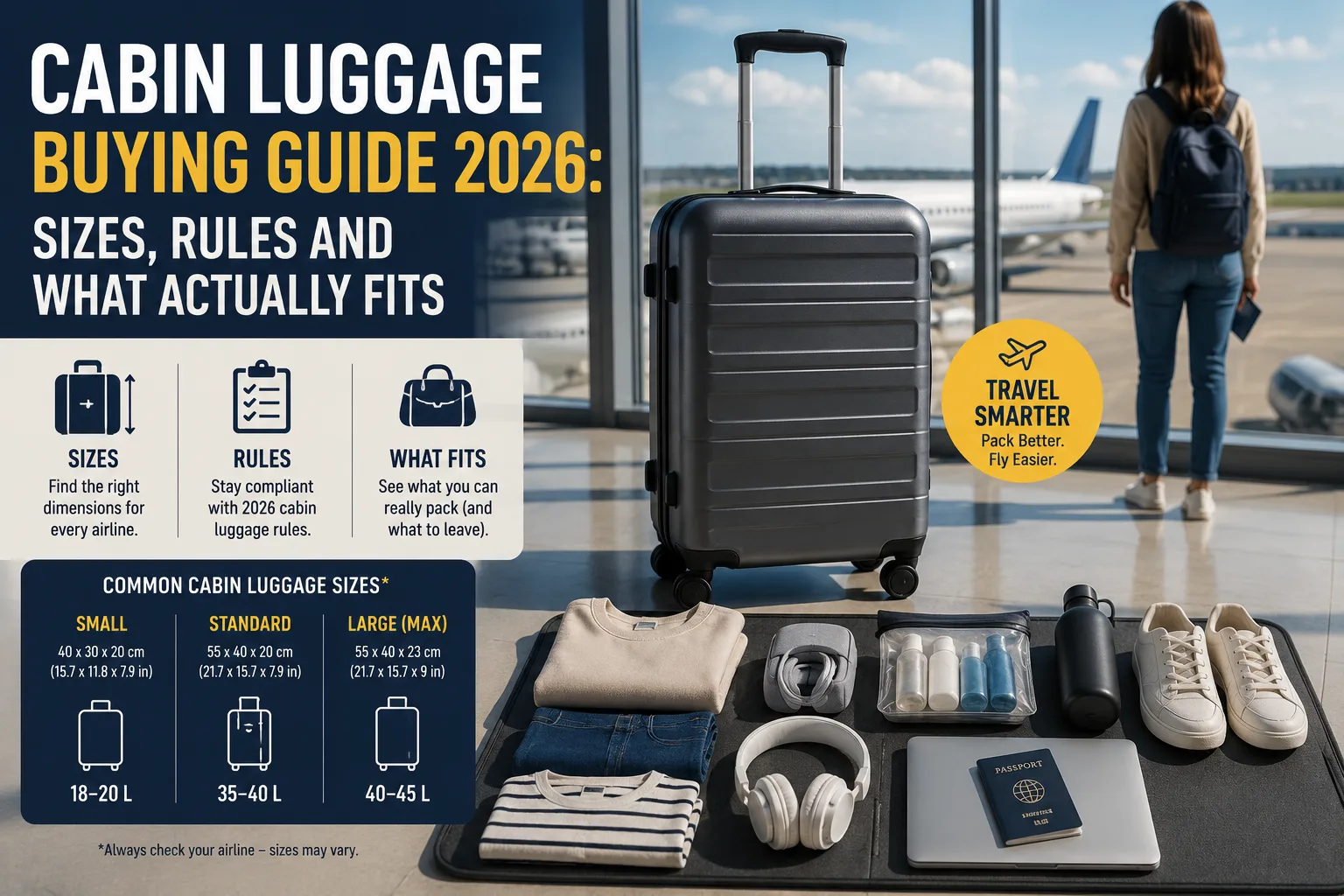
Choosing the right cabin luggage can save you money, time and stress at the airport. Airline carry-on rules vary widely, and buying the wrong suitcase could result in expensive gate fees or having to check your bag unexpectedly. This guide explains the most common cabin luggage sizes, compares airline restrictions, and highlights the features that matter most when buying a new carry-on suitcase.
Cabin baggage policies have become increasingly strict over the past few years, particularly among low-cost airlines. While many manufacturers advertise their luggage as "cabin approved," not every suitcase complies with every airline's rules. Instead of buying the largest carry-on possible, it's usually smarter to choose a size that works across the airlines you fly most often.
Cabin Luggage Sizes by Airline
The safest option for frequent European travellers is a suitcase measuring approximately 55 × 40 × 20 cm. This size fits the carry-on requirements of most major airlines while reducing the risk of paying unexpected baggage charges.
| Airline | Maximum Cabin Size | Notes |
|---|---|---|
| Ryanair | 55 × 40 × 20 cm | Priority boarding required |
| easyJet | 56 × 45 × 25 cm | Large cabin bag requires eligible fare |
| British Airways | 56 × 45 × 25 cm | Includes one personal item |
| Wizz Air | 55 × 40 × 23 cm | Priority required |
| Jet2 | 56 × 45 × 25 cm | Plus one small personal item |
Hard Shell vs Soft Shell
Hard-shell suitcases offer excellent protection for electronics, fragile items and valuables. They are also more resistant to rain and scratches. However, they cannot compress if your bag is slightly overfilled.
Soft-shell luggage provides greater flexibility and often includes useful external pockets for laptops, travel documents and chargers. Because the fabric can compress slightly, soft luggage may fit more easily into airline baggage sizers.
Insert Product Card Here
A Stylish Premium Alternative
Insert Product Card Here
Features Worth Paying For
- Lightweight construction: A lighter suitcase leaves more of your weight allowance available for clothing and personal items.
- Strong wheels: Four double-spinner wheels provide smooth movement through airports, while larger inline wheels perform better on uneven surfaces.
- Comfortable telescopic handle: A sturdy handle makes long walks through terminals much easier.
- Reliable warranty: Check what the warranty actually covers, particularly for wheels, handles and airline damage.
- Durable zippers or frame locks: High-quality closures improve both security and longevity.
Features You Can Ignore
- Built-in USB charging ports.
- Fancy interior lighting.
- Large numbers of organisational pockets.
- Marketing claims that don't improve durability or capacity.
Many premium features sound impressive but make very little difference during everyday travel. Focus on build quality, weight and dimensions before considering cosmetic extras.
Packing Tips
Packing efficiently allows you to maximise the available space without exceeding airline limits.
- Wear your heaviest jacket and shoes during travel.
- Roll clothing to reduce wrinkles and save space.
- Use packing cubes to compress clothing.
- Place liquids where they can be accessed easily during security checks.
- Always weigh your suitcase before leaving home.
How to Choose the Right Cabin Luggage
Your choice should depend on how often you travel and which airlines you use most frequently. Business travellers often benefit from lightweight soft-shell luggage with quick-access laptop compartments, while holiday travellers may prefer the durability and weather resistance of hard-shell cases.
If you regularly fly with multiple airlines, avoid buying a suitcase that only just meets the largest permitted dimensions. Choosing a slightly smaller carry-on provides greater flexibility and reduces the chance of problems at the boarding gate.
Frequent travellers should also consider replacement wheels, spare parts and warranty support, as these become increasingly important after years of regular use.
How We Evaluated Cabin Luggage
Our recommendations are based on airline baggage policies, manufacturer specifications, empty weight, build quality, durability, ease of packing and overall value. Airline size limits can change, so travellers should always confirm the latest baggage rules before departure.
Final Verdict
The best cabin luggage isn't necessarily the largest or the most expensive. Choosing the correct dimensions, keeping weight low and investing in durable wheels and quality construction will provide the greatest long-term value. A well-sized cabin suitcase can help you avoid airline fees while making every journey easier and more comfortable.
Frequently Asked Questions
What size cabin luggage fits most airlines?
A suitcase measuring around 55 × 40 × 20 cm is one of the safest choices for frequent European travellers because it complies with many airline carry-on policies.
Do wheels count towards cabin luggage size?
Yes. Airlines measure the entire suitcase, including wheels, handles and any fixed external parts.
Should I choose hard-shell or soft-shell luggage?
Hard-shell luggage provides better protection, while soft-shell luggage offers greater flexibility and easier access to travel essentials.